Business · Leadership
Remote Hiring Best Practices — Building Effective Global Engineering Teams in 2026
Remote work is permanent. Here's how to hire, onboard, and manage distributed engineering teams across time zones, cultures, and employment structures.

Anurag Verma
8 min read
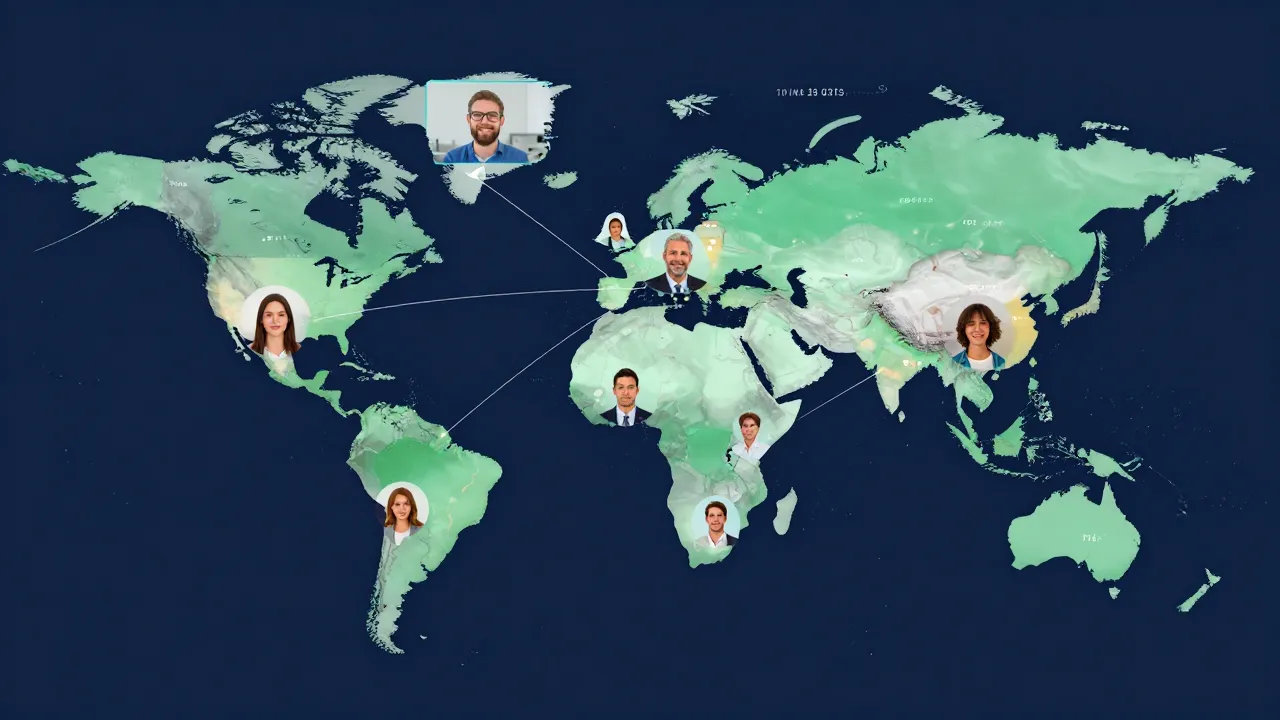
Sponsored
Remote engineering work is no longer an experiment. It is the default for many companies. But hiring globally creates challenges that local hiring does not: time zones, employment law, communication patterns, and cultural differences.
Companies that master remote hiring access global talent. Those that do not struggle with turnover, miscommunication, and legal risk.
Distributed teams require intentional practices that co-located teams can skip
The Remote Hiring Landscape in 2026
| Model | Description | Best For |
|---|---|---|
| Full remote | No office, everyone distributed | Startups, global companies |
| Remote-first | Office exists, remote is default | Companies transitioning |
| Hybrid | Mix of office and remote | Large enterprises |
| Contractor-based | Independent contractors globally | Flexible scaling |
| EOR-based | Employer of Record handles employment | Global full-time hiring |
Most growing tech companies use a combination of these models.
Sourcing Global Talent
Where to Find Remote Engineers
Traditional Platforms:
- LinkedIn (still dominant for senior roles)
- Indeed, Glassdoor (job boards)
- AngelList/Wellfound (startup-focused)
Remote-Specific:
- Remote OK, We Work Remotely
- Working Nomads
- Remotive
Regional Platforms:
- Eastern Europe: Djinni, DOU (Ukraine)
- Latin America: GetonBoard, Workana
- India: Naukri, Cutshort
- Southeast Asia: Kalibrr, JobStreet
Community-Based:
- GitHub (evaluate actual work)
- Stack Overflow Jobs
- Discord/Slack communities
- Open source contributors
Evaluating Remote Candidates
Remote work requires skills that office work does not:
| Skill | Why It Matters | How to Assess |
|---|---|---|
| Written communication | Primary async communication | Review written responses, ask for writing samples |
| Self-management | No physical supervision | Ask about how they structure their day |
| Proactive communication | Must surface problems early | Behavioral questions about past challenges |
| Time zone flexibility | May need some overlap | Ask about availability windows |
| Home setup | Affects productivity | Ask about workspace, internet reliability |
Interview Process for Remote
Structure interviews to evaluate remote-specific skills:
1. Async Technical Assessment
- Take-home project with reasonable scope (4-8 hours max)
- Evaluate code quality, documentation, and communication
- See how they handle unclear requirements
2. Synchronous Technical Interview
- Live coding or system design
- Assess real-time problem-solving
- Observe communication style under pressure
3. Behavioral Interview
- Focus on remote work scenarios:
- “Tell me about a time you were blocked and your manager was unavailable”
- “How do you handle disagreements with colleagues in writing?”
- “Describe how you structure your workday”
4. Team Fit Conversation
- Introduce to potential teammates
- Assess cultural fit and communication style
- Allow candidate to ask questions
Employment Structures
Contractor vs Employee
| Factor | Contractor | Employee |
|---|---|---|
| Control | Less (legally required) | More |
| Benefits | None | Health, PTO, etc. |
| Taxes | They handle | You handle |
| Termination | Usually easy | Varies by country |
| Loyalty | Lower (typically) | Higher |
| Cost | Lower direct cost | Higher total cost |
| Legal risk | Misclassification risk | Employment law compliance |
Contractor misclassification is a real risk. If you control how, when, and where someone works, they may legally be an employee regardless of contract terms.
Employer of Record (EOR)
EORs like Deel, Remote, and Oyster employ people on your behalf:
How EOR Works:
You → EOR contract → EOR employs locally → Worker

Benefits:
- Legal employment in countries without your entity
- Local compliance handled
- Benefits administration
- Payroll in local currency

Costs:
- $500-1000/month per employee (plus salary)
- Less direct relationship
- Dependent on EOR quality
Use EOR when:
- You want full-time employees in countries without your legal entity
- You are testing a new market before establishing an entity
- You have small numbers of employees in many countries
Your Own Entity
Establishing legal entities makes sense when:
- You have 10+ employees in a country
- You want maximum control over employment terms
- Long-term commitment to that market
- EOR costs exceed entity maintenance costs
Compensation Strategy
Pay Equity Approaches
1. Location-Based Pay Pay based on local market rates.
- Pro: Cost-effective in lower-cost regions
- Con: Perceived unfairness, retention challenges
2. Global Pay Same pay for same role regardless of location.
- Pro: Fair, simple, good for morale
- Con: Expensive, may overpay in some markets
3. Tiered/Banded Pay Group locations into cost-of-living tiers.
- Pro: Balances fairness and cost
- Con: Border cases, tier disputes
Most common approach in 2026: Tiered pay with transparency about the methodology.
Compensation Components
| Component | Considerations |
|---|---|
| Base salary | Local currency, regular payment schedule |
| Equity | May have tax implications in some countries |
| Benefits | Often handled differently per country |
| Home office stipend | Standard: $500-2000 one-time or annual |
| Internet/phone | Common: $50-150/month |
| Coworking allowance | Optional: for those who want outside space |
Onboarding Remote Engineers
Remote onboarding requires more structure than office onboarding.
First Week Structure
Day 1: Welcome and Setup
├── Welcome video from leadership
├── IT setup (accounts, tools, access)
├── Meet manager 1:1
└── Read onboarding documentation

Day 2-3: Product and Codebase
├── Product overview session
├── Architecture walkthrough
├── Codebase tour with buddy
└── First small task (low stakes)

Day 4-5: Team Integration
├── Meet team members 1:1
├── Attend team ceremonies
├── First PR submitted
└── Week 1 retrospective with manager
Onboarding Documentation
Create comprehensive documentation that answers:
- How to set up the development environment
- How to run and test locally
- How to deploy (or how deployments work)
- Where to find product specs and designs
- How to communicate (which channels for what)
- How to request access, PTO, expense reimbursement
- Who to contact for different types of questions
Buddy System
Assign a buddy who is:
- Available in overlapping hours
- Experienced with the codebase
- Good at communication
- Not the new hire’s manager
The buddy answers “dumb questions” and helps the new hire navigate the organization.
Communication Patterns
Async-First Communication
Document decisions and context in writing:
Good async message:
"I'm proposing we use Redis for session storage instead of
the database. Reasons: 1) Lower latency for auth checks
2) Built-in TTL for session expiry 3) Horizontal scaling
if needed. Tradeoffs: Additional infrastructure, potential
data loss on restart. Mitigation: Persistence config.
Please comment by EOD Thursday if you have concerns."

Bad async message:
"Thinking we should use Redis for sessions. Thoughts?"
Meeting Hygiene
Meetings in distributed teams must be:
- Recorded (for those who cannot attend live)
- Documented (written summary of decisions)
- Scheduled respectfully (rotate inconvenient times)
- Optional when possible (async alternatives preferred)
Time Zone Management
Core hours: Define 3-4 hours of overlap for synchronous work.
Example: US and Europe Team
├── Europe morning: 9am-12pm CET (async work)
├── Overlap: 12pm-4pm CET / 6am-10am ET (meetings, collaboration)
└── US afternoon: 10am-6pm ET (async work)
Protect async time. Not every conversation needs a meeting.
Performance Management
Remote Performance Indicators
Focus on outputs, not activity:
| Good Metrics | Bad Metrics |
|---|---|
| Features shipped | Hours online |
| Code quality (reviews, bugs) | Messages sent |
| Documentation created | Response time to pings |
| Teammates helped | Attendance at optional meetings |
| Problems solved | ”Looking busy” |
1:1 Structure for Remote
Weekly or biweekly 1:1s should cover:
- Wellbeing check. How are they doing personally?
- Blockers. What is preventing progress?
- Feedback. Bidirectional, specific, timely
- Growth. Career development, skills, goals
- Context. Company/team updates they need
Building Relationships
Remote managers must be intentional about relationship-building:
- Non-work conversation at the start of 1:1s
- Virtual coffee chats (optional, casual)
- In-person meetups (quarterly or annually if budget allows)
- Team rituals (Friday demos, wins channel, celebrations)
Legal and Compliance
Key Considerations by Region
| Region | Key Considerations |
|---|---|
| EU/UK | GDPR, strong employee protections, works councils |
| US | State-by-state rules, at-will employment, benefits expectations |
| Latin America | Mandatory benefits (aguinaldo, etc.), severance requirements |
| India | Gratuity, provident fund, complex labor law |
| Southeast Asia | Varies widely by country |
Always consult local legal counsel. Employment law is too complex and high-stakes for assumptions.
Data and Security
Remote workers need:
- Company-managed devices or BYOD policy
- VPN for sensitive access
- Security training (phishing, etc.)
- Clear data handling policies
- Incident reporting procedures
The Effective Remote Team
Building effective remote teams requires intentionality that co-located teams can skip:
- Document everything. Written communication is your culture
- Hire for remote skills. Communication and self-management are non-negotiable
- Over-invest in onboarding. The first weeks determine success
- Protect async time. Not every conversation needs a meeting
- Focus on outcomes. Measure results, not activity
- Build relationships intentionally. They do not happen by accident
The companies that master these practices access a global talent pool. Those that do not burn through remote hires and conclude “remote does not work.”
Remote work works. But it requires different skills and systems than office work.
Sponsored
More from this category
More from Business
 R.01
R.01 AI-Automated Client Reporting: How Agencies Are Cutting 5 Hours Per Client Per Month
 R.02
R.02 Product-Led Growth for SaaS: How Developer Tools Get to Enterprise Without a Sales Army
 R.03
R.03 Project Post-Mortems for Agencies: The Debrief Habit That Makes Teams Better
Sponsored
Discussion
Join the conversation.
Comments are powered by GitHub Discussions. Sign in with your GitHub account to leave a comment.
Sponsored