AI Integration · Robotics
Physical AI & Robotics Development: Getting Started in 2026
A developer's introduction to Physical AI and robotics development in 2026. Learn about NVIDIA Cosmos, Isaac Sim, ROS 2 integration, and how to go from simulation to real-world deployment.

Anurag Verma
9 min read
Sponsored
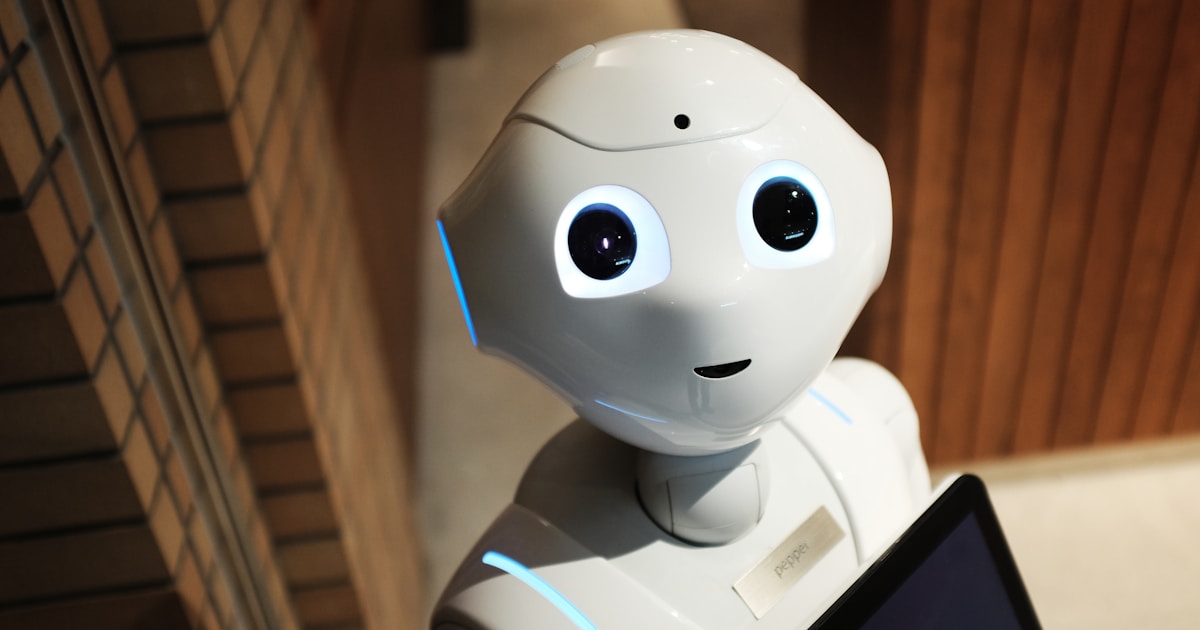
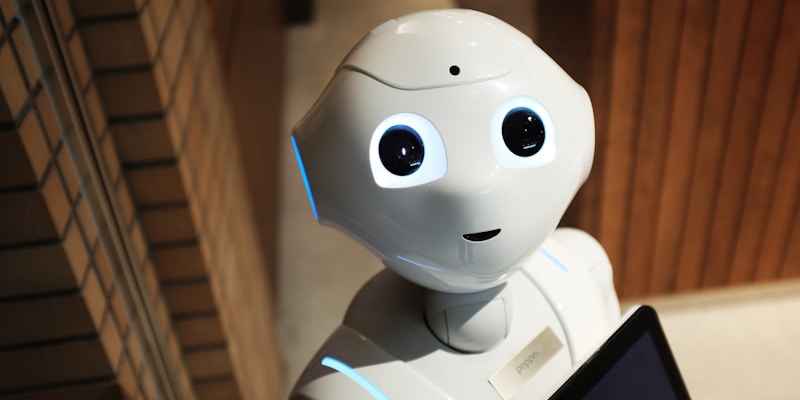
Physical AI—the term NVIDIA coined at CES 2026—represents a fundamental shift in how we build intelligent systems that interact with the real world. For software developers, this opens up entirely new application categories that were previously the domain of specialized robotics engineers.
This guide will help you understand the landscape and start building with Physical AI.

What is Physical AI?
Physical AI refers to AI systems that can:
- Understand physical environments - 3D spatial awareness, object recognition
- Predict physical outcomes - How objects will move, interact, fall
- Plan physical actions - Navigation, manipulation, coordination
- Execute in the real world - Control robots, vehicles, machines
Unlike traditional AI that operates on text, images, or code, Physical AI must deal with the messiness of reality: gravity, friction, unexpected obstacles, and real-time constraints.
The Software Stack
┌─────────────────────────────────────────────────────────────┐
│                    Physical AI Stack                         │
├─────────────────────────────────────────────────────────────┤
│                                                              │
│  Application Layer                                           │
│  ├── Task Planning (What to do)                             │
│  ├── Motion Planning (How to move)                          │
│  └── Behavior Control (When to act)                         │
│                                                              │
│  Foundation Models                                           │
│  ├── NVIDIA Cosmos (World simulation)                       │
│  ├── Vision-Language Models (Scene understanding)           │
│  └── Manipulation Models (Grasping, handling)               │
│                                                              │
│  Simulation & Training                                       │
│  ├── Isaac Sim (NVIDIA)                                     │
│  ├── Gazebo (Open source)                                   │
│  └── MuJoCo (DeepMind)                                      │
│                                                              │
│  Robot Operating System                                      │
│  ├── ROS 2 (Standard framework)                             │
│  ├── Navigation Stack                                       │
│  └── MoveIt 2 (Manipulation)                                │
│                                                              │
│  Hardware Abstraction                                        │
│  ├── Motor controllers                                      │
│  ├── Sensor interfaces                                      │
│  └── Safety systems                                         │
│                                                              │
└─────────────────────────────────────────────────────────────┘
NVIDIA Cosmos Foundation Model
Cosmos is NVIDIA’s foundation model for Physical AI, designed to simulate realistic physical environments.
Key Capabilities
| Feature | Description | Use Case |
|---|---|---|
| World Generation | Create diverse 3D environments | Training data generation |
| Physics Simulation | Accurate physical interactions | Robot behavior testing |
| Synthetic Data | Photo-realistic rendering | Computer vision training |
| Scenario Variation | Randomize conditions | Robust policy learning |
Getting Started with Cosmos
# Note: API is illustrative based on announced capabilities
from nvidia_cosmos import CosmosClient, WorldConfig, AgentConfig

# Initialize Cosmos client
cosmos = CosmosClient(api_key="your-api-key")

# Define a warehouse environment
world_config = WorldConfig(
    template="indoor_warehouse",
    size=(50, 50, 10),  # meters
    features={
        "shelving_units": 20,
        "pallets": 50,
        "obstacles": "random",
        "lighting": "industrial"
    },
    physics={
        "gravity": 9.81,
        "friction_coefficient": 0.6
    }
)

# Create the simulation world
world = cosmos.create_world(world_config)

# Define robot agent
robot_config = AgentConfig(
    model="mobile_manipulator",
    sensors=["lidar", "rgbd_camera", "force_torque"],
    capabilities=["navigation", "manipulation"]
)

# Spawn robot in the world
robot = world.spawn_agent(robot_config, position=(0, 0, 0))

# Generate training scenarios
scenarios = world.generate_scenarios(
    task="pick_and_place",
    variations=1000,
    difficulty_range=(0.3, 0.9)
)

# Export for training
cosmos.export_dataset(
    scenarios,
    format="isaac_sim",
    output_path="./training_data"
)
Simulation Environments
NVIDIA Isaac Sim
Isaac Sim is the primary simulation environment for robotics development with NVIDIA hardware.
# Isaac Sim scene setup
from omni.isaac.core import World
from omni.isaac.core.robots import Robot
from omni.isaac.sensor import Camera, Lidar

# Create simulation world
world = World(stage_units_in_meters=1.0)

# Add ground plane
world.scene.add_default_ground_plane()

# Load a robot model
robot = world.scene.add(
    Robot(
        prim_path="/World/Robot",
        name="my_robot",
        usd_path="/path/to/robot.usd"
    )
)

# Add sensors
camera = Camera(
    prim_path="/World/Robot/camera",
    resolution=(640, 480),
    frequency=30
)

lidar = Lidar(
    prim_path="/World/Robot/lidar",
    rotation_frequency=10,
    horizontal_fov=360,
    vertical_fov=30
)

# Simulation loop
while simulation_running:
    world.step(render=True)

    # Get sensor data
    rgb_image = camera.get_rgb()
    depth_image = camera.get_depth()
    lidar_points = lidar.get_point_cloud()

    # Run your AI policy
    action = policy.predict(rgb_image, depth_image, lidar_points)

    # Apply action to robot
    robot.apply_action(action)
Gazebo (Open Source Alternative)
For those who prefer open-source tools:
# ROS 2 + Gazebo setup
import rclpy
from rclpy.node import Node
from geometry_msgs.msg import Twist
from sensor_msgs.msg import LaserScan, Image

class RobotController(Node):
    def __init__(self):
        super().__init__('robot_controller')

        # Publishers
        self.cmd_vel_pub = self.create_publisher(
            Twist, '/cmd_vel', 10
        )

        # Subscribers
        self.lidar_sub = self.create_subscription(
            LaserScan, '/scan', self.lidar_callback, 10
        )
        self.camera_sub = self.create_subscription(
            Image, '/camera/image_raw', self.camera_callback, 10
        )

        # Control loop
        self.timer = self.create_timer(0.1, self.control_loop)

    def lidar_callback(self, msg):
        self.latest_scan = msg

    def camera_callback(self, msg):
        self.latest_image = msg

    def control_loop(self):
        # Your AI policy here
        if hasattr(self, 'latest_scan') and hasattr(self, 'latest_image'):
            action = self.policy.predict(
                self.latest_scan,
                self.latest_image
            )

            cmd = Twist()
            cmd.linear.x = action.linear_velocity
            cmd.angular.z = action.angular_velocity
            self.cmd_vel_pub.publish(cmd)

def main():
    rclpy.init()
    controller = RobotController()
    rclpy.spin(controller)
    rclpy.shutdown()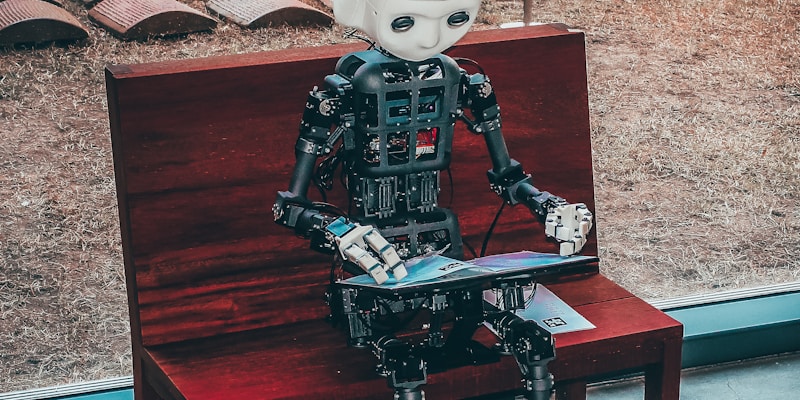
ROS 2 Integration Patterns
ROS 2 (Robot Operating System 2) is the standard framework for robotics development.
Project Structure
my_robot_project/
├── src/
│   ├── my_robot_description/    # Robot URDF/SDF models
│   │   ├── urdf/
│   │   ├── meshes/
│   │   └── config/
│   ├── my_robot_bringup/        # Launch files
│   │   ├── launch/
│   │   └── config/
│   ├── my_robot_control/        # Control nodes
│   │   ├── my_robot_control/
│   │   └── setup.py
│   └── my_robot_ai/             # AI components
│       ├── my_robot_ai/
│       │   ├── perception.py
│       │   ├── planning.py
│       │   └── policy.py
│       └── setup.py
├── docker/
│   └── Dockerfile
└── README.md
AI-Powered Navigation Node
# my_robot_ai/policy.py
import rclpy
from rclpy.node import Node
from nav_msgs.msg import OccupancyGrid, Path
from geometry_msgs.msg import PoseStamped
import torch
from .models import NavigationPolicy

class AINavigationNode(Node):
    def __init__(self):
        super().__init__('ai_navigation')

        # Load trained policy
        self.policy = NavigationPolicy.load('models/nav_policy.pt')
        self.policy.eval()

        # ROS interfaces
        self.goal_sub = self.create_subscription(
            PoseStamped, '/goal_pose', self.goal_callback, 10
        )
        self.map_sub = self.create_subscription(
            OccupancyGrid, '/map', self.map_callback, 10
        )
        self.path_pub = self.create_publisher(
            Path, '/planned_path', 10
        )

        self.get_logger().info('AI Navigation node initialized')

    def goal_callback(self, goal_msg):
        if not hasattr(self, 'current_map'):
            self.get_logger().warn('No map received yet')
            return

        # Prepare inputs for policy
        map_tensor = self.preprocess_map(self.current_map)
        goal_tensor = self.preprocess_goal(goal_msg)

        # Run inference
        with torch.no_grad():
            path_waypoints = self.policy(map_tensor, goal_tensor)

        # Convert to ROS Path message
        path_msg = self.waypoints_to_path(path_waypoints)
        self.path_pub.publish(path_msg)

    def map_callback(self, map_msg):
        self.current_map = map_msg

    def preprocess_map(self, map_msg):
        # Convert OccupancyGrid to tensor
        width = map_msg.info.width
        height = map_msg.info.height
        data = torch.tensor(map_msg.data).reshape(height, width)
        return data.unsqueeze(0).unsqueeze(0).float() / 100.0

    def preprocess_goal(self, goal_msg):
        return torch.tensor([
            goal_msg.pose.position.x,
            goal_msg.pose.position.y,
            goal_msg.pose.orientation.z,
            goal_msg.pose.orientation.w
        ]).unsqueeze(0)

    def waypoints_to_path(self, waypoints):
        path = Path()
        path.header.frame_id = 'map'
        path.header.stamp = self.get_clock().now().to_msg()

        for wp in waypoints:
            pose = PoseStamped()
            pose.header = path.header
            pose.pose.position.x = float(wp[0])
            pose.pose.position.y = float(wp[1])
            path.poses.append(pose)

        return path
From Simulation to Real-World Deployment
The biggest challenge in robotics is the “sim-to-real” gap—policies that work in simulation often fail in the real world.
Domain Randomization
Train with variations to build robust policies:
class DomainRandomizer:
    def __init__(self):
        self.randomization_params = {
            'lighting': {'intensity': (0.3, 1.5), 'color_temp': (3000, 7000)},
            'physics': {'friction': (0.4, 0.8), 'mass_scale': (0.9, 1.1)},
            'sensor': {'noise_std': (0.0, 0.05), 'dropout': (0.0, 0.1)},
            'geometry': {'scale': (0.95, 1.05), 'position_offset': (-0.02, 0.02)}
        }

    def randomize_environment(self, env):
        # Randomize lighting
        env.set_lighting(
            intensity=random.uniform(*self.randomization_params['lighting']['intensity']),
            color_temp=random.uniform(*self.randomization_params['lighting']['color_temp'])
        )

        # Randomize physics
        for obj in env.get_objects():
            obj.friction = random.uniform(*self.randomization_params['physics']['friction'])
            obj.mass *= random.uniform(*self.randomization_params['physics']['mass_scale'])

        # Add sensor noise
        env.sensor_noise_std = random.uniform(*self.randomization_params['sensor']['noise_std'])

        return env

# Training loop with domain randomization
randomizer = DomainRandomizer()

for episode in range(num_episodes):
    env = randomizer.randomize_environment(base_env)
    observation = env.reset()

    while not done:
        action = policy(observation)
        observation, reward, done, info = env.step(action)
        # Update policy...
Reality Gap Mitigation
class SimToRealAdapter:
    """Adapts simulation-trained policies for real-world deployment"""

    def __init__(self, sim_policy, calibration_data):
        self.sim_policy = sim_policy
        self.calibration = self.compute_calibration(calibration_data)

    def compute_calibration(self, data):
        """Learn systematic differences between sim and real"""
        # Compute observation normalization
        obs_mean = np.mean(data['observations'], axis=0)
        obs_std = np.std(data['observations'], axis=0)

        # Compute action scaling
        action_scale = data['real_action_scale'] / data['sim_action_scale']

        return {
            'obs_mean': obs_mean,
            'obs_std': obs_std,
            'action_scale': action_scale
        }

    def predict(self, real_observation):
        # Normalize observation to match simulation distribution
        normalized_obs = (real_observation - self.calibration['obs_mean']) / self.calibration['obs_std']

        # Get action from simulation-trained policy
        sim_action = self.sim_policy.predict(normalized_obs)

        # Scale action for real hardware
        real_action = sim_action * self.calibration['action_scale']

        # Apply safety limits
        real_action = np.clip(real_action, self.action_limits[0], self.action_limits[1])

        return real_action
LG’s Humanoid Robot: A Case Study
At CES 2026, LG unveiled a humanoid robot designed for household tasks. Here’s what we can learn from their approach:
Architecture Highlights
- Modular task system - Each task (laundry, dishes) is a separate module
- Hierarchical control - High-level planning separate from motor control
- Human interaction layer - Natural language understanding for commands
- Safety-first design - Multiple redundant safety systems
Simplified Task Architecture
class HouseholdRobot:
    def __init__(self):
        self.perception = PerceptionModule()
        self.planner = TaskPlanner()
        self.manipulator = ManipulationController()
        self.navigator = NavigationController()
        self.safety = SafetyMonitor()

    async def execute_task(self, natural_language_command: str):
        # Parse command
        task = await self.parse_command(natural_language_command)

        # Plan task sequence
        plan = await self.planner.create_plan(task, self.perception.get_scene())

        # Execute with safety monitoring
        for step in plan.steps:
            # Check safety before each step
            if not self.safety.is_safe_to_proceed():
                await self.handle_safety_stop()
                continue

            if step.type == 'navigate':
                await self.navigator.go_to(step.target)
            elif step.type == 'manipulate':
                await self.manipulator.execute(step.action)
            elif step.type == 'wait':
                await asyncio.sleep(step.duration)

            # Verify step completion
            if not await self.verify_step(step):
                await self.handle_step_failure(step)

    async def parse_command(self, command: str):
        # Use LLM to parse natural language to structured task
        response = await self.llm.parse(
            prompt=f"Parse this household task: {command}",
            output_format=TaskSchema
        )
        return response
Getting Started Resources
Development Environment Setup
# Install ROS 2 Humble (Ubuntu 22.04)
sudo apt update && sudo apt install -y curl gnupg lsb-release
sudo curl -sSL https://raw.githubusercontent.com/ros/rosdistro/master/ros.key -o /usr/share/keyrings/ros-archive-keyring.gpg
echo "deb [arch=$(dpkg --print-architecture) signed-by=/usr/share/keyrings/ros-archive-keyring.gpg] http://packages.ros.org/ros2/ubuntu $(lsb_release -cs) main" | sudo tee /etc/apt/sources.list.d/ros2.list > /dev/null
sudo apt update && sudo apt install -y ros-humble-desktop

# Install simulation tools
sudo apt install -y ros-humble-gazebo-ros-pkgs
pip install nvidia-isaac-sim  # Requires NVIDIA GPU

# Install AI/ML dependencies
pip install torch torchvision
pip install stable-baselines3  # RL algorithms
pip install gymnasium  # Environment interface
Recommended Learning Path
- Week 1-2: ROS 2 basics (nodes, topics, services)
- Week 3-4: Simulation with Gazebo
- Week 5-6: Computer vision for robotics
- Week 7-8: Navigation and path planning
- Week 9-10: Manipulation basics
- Week 11-12: RL for robotics
- Ongoing: Isaac Sim and Cosmos integration
Key Takeaways
- Physical AI is software - You don’t need a hardware background to start
- Simulation is essential - Train and test before touching real robots
- ROS 2 is the standard - Learn it to work in the ecosystem
- Domain randomization helps bridge sim-to-real gap
- Start with navigation - It’s the most accessible entry point
Resources
- NVIDIA Isaac Sim Documentation
- ROS 2 Humble Documentation
- Gazebo Simulation
- MoveIt 2 for Manipulation
- OpenAI Gym / Gymnasium
Interested in robotics development? Join the CODERCOPS community to connect with other developers exploring Physical AI.
Sponsored
More from this category
More from AI Integration
 R.01
R.01 Document AI for Agencies: Extracting Structure from PDFs, Forms, and Contracts
 R.02
R.02 AI Video Generation in 2026: What Agencies Need to Know Before Pitching It to Clients
 R.03
R.03 Browser-Use Agents: Automating the Web When APIs Don't Exist
Sponsored
Discussion
Join the conversation.
Comments are powered by GitHub Discussions. Sign in with your GitHub account to leave a comment.
Sponsored