Technology · Engineering
EV Charging Infrastructure: A $100B Developer Opportunity in 2026
The EV charging software market is exploding. Learn how developers can build with OCPP, fleet management APIs, payment integration, and smart grid optimization in this booming $100B+ infrastructure sector.

Anurag Verma
20 min read

Sponsored
Every software gold rush follows the same pattern: new hardware creates demand, protocols emerge to standardize communication, and then the real money flows to the developers who build the middleware, dashboards, and integrations that make the hardware actually useful. We saw it with smartphones and app stores, with cloud computing and SaaS, with IoT and device management platforms. In 2026, that same pattern is playing out in electric vehicle charging infrastructure, and the numbers are staggering.
The global EV charging infrastructure market reached an estimated $50.2 billion in 2026 and is projected to grow at a 25% CAGR to hit $238.8 billion by 2033. The charging station software market alone grew from $1.35 billion in 2025 to $1.68 billion in 2026, on track to reach $6.81 billion by 2032. Electric vehicles now account for over 27.5% of global car sales, with more than 1,000 EV models available worldwide. Every single one of those vehicles needs to charge, and every charging station needs software to operate.
At CODERCOPS, we have been tracking this space closely because it represents one of the most compelling intersections of software development and real-world infrastructure we have ever seen. This is not speculative. The chargers are being installed right now, and they need your code.
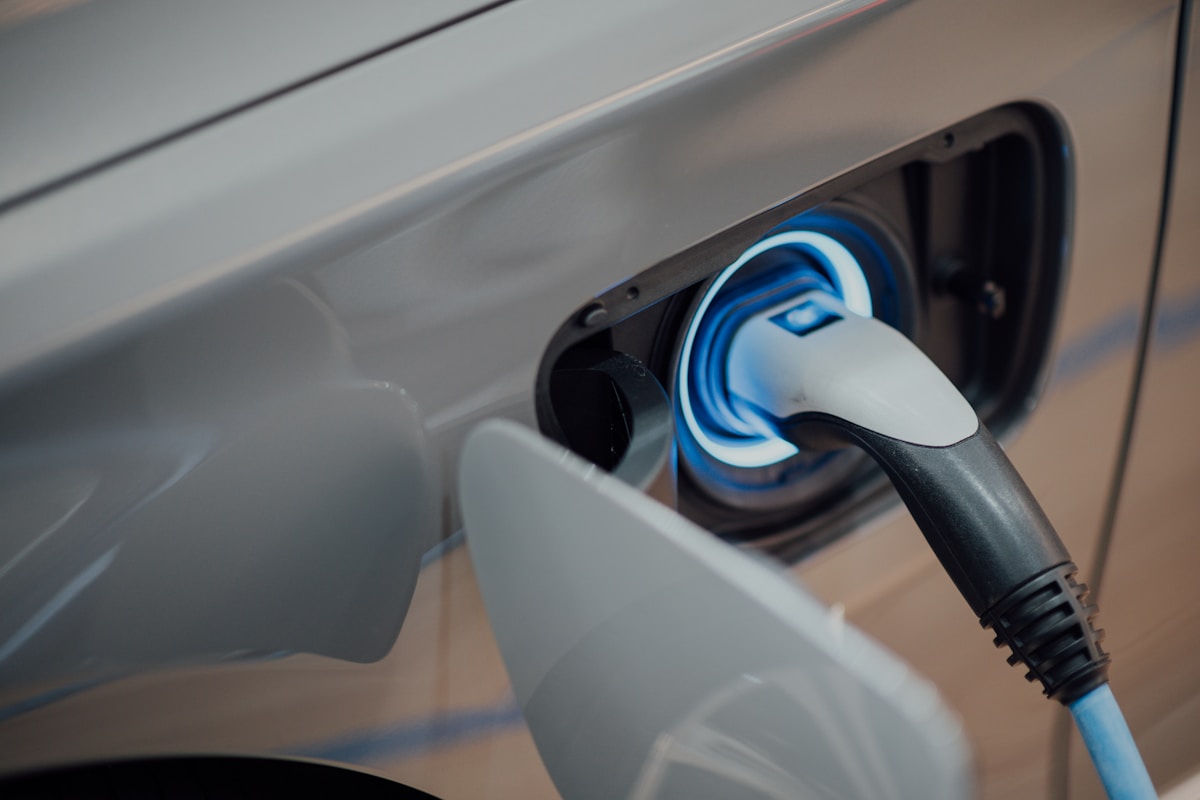 EV charging stations are being deployed at unprecedented scale, each one requiring sophisticated software to operate
The Software Layer That Powers Every Charger
Here is something most developers do not realize: an EV charger is essentially an IoT device with a payment terminal attached. The hardware itself, the cables, connectors, and power electronics, is only part of the equation. The software layer handles everything else:
- Session management — starting, monitoring, and stopping charging sessions
- Authentication and authorization — RFID cards, mobile apps, plug-and-charge
- Payment processing — per-kWh billing, subscriptions, roaming networks
- Energy management — load balancing across multiple chargers at a site
- Grid integration — demand response, time-of-use optimization, vehicle-to-grid
- Remote monitoring — uptime tracking, diagnostics, firmware updates
- User experience — mobile apps, station finders, real-time availability
Each of these represents a distinct software problem, and the industry is still early enough that there are massive gaps between what exists and what operators need.
Understanding OCPP: The Protocol Every EV Developer Needs to Know
The Open Charge Point Protocol (OCPP) is the backbone of EV charging software. Maintained by the Open Charge Alliance with over 400 members globally, OCPP defines how charging stations communicate with central management systems (CMS). Think of it as the HTTP of EV charging.
OCPP Versions at a Glance
| Version | Release | Transport | Key Features |
|---|---|---|---|
| OCPP 1.5 | 2012 | SOAP/XML | Basic charging operations |
| OCPP 1.6 | 2015 | JSON/WebSocket | Most widely deployed, smart charging |
| OCPP 2.0.1 | 2020 | JSON/WebSocket | Device management, ISO 15118, security profiles |
| OCPP 2.1 | 2025 | JSON/WebSocket | DER control, vehicle-to-grid (V2G), backward compatible with 2.0.1 |
The latest version, OCPP 2.1, released in January 2025, is a major milestone. It adds distributed energy resources (DER) control and vehicle-to-grid capabilities, which means chargers can now push energy back to the grid. OCPP 2.0.1 Edition 3 has also been accepted by the IEC as standard IEC 63584, giving it formal international standardization.
How OCPP Works Under the Hood
OCPP uses JSON over WebSocket for real-time bidirectional communication. The protocol defines three message types:
Message Types:
  2 = CALL       (Request from either side)
  3 = CALLRESULT (Successful response)
  4 = CALLERROR  (Error response)

Format:
  CALL:       [2, "<MessageId>", "<Action>", {<Payload>}]
  CALLRESULT: [3, "<MessageId>", {<Payload>}]
  CALLERROR:  [4, "<MessageId>", "<ErrorCode>", "<Description>", {<Details>}]
Here is a real-world example of a charger booting up and registering with a central system:
// 1. Charger sends BootNotification to CMS
[2, "msg-001", "BootNotification", {
  "chargingStation": {
    "model": "FastCharge-DC-150",
    "vendorName": "EVTech Corp",
    "serialNumber": "FDC150-2026-00842",
    "firmwareVersion": "3.2.1"
  },
  "reason": "PowerUp"
}]

// 2. CMS responds with acceptance and heartbeat interval
[3, "msg-001", {
  "currentTime": "2026-02-28T10:30:00.000Z",
  "interval": 300,
  "status": "Accepted"
}]

// 3. Charger sends StatusNotification for each connector
[2, "msg-002", "StatusNotification", {
  "timestamp": "2026-02-28T10:30:01.000Z",
  "connectorStatus": "Available",
  "evseId": 1,
  "connectorId": 1
}]
And here is what a complete charging session looks like from the protocol level:
// User taps RFID card -> Charger requests authorization
[2, "msg-010", "Authorize", {
  "idToken": {
    "idToken": "AA12BB34CC56",
    "type": "ISO14443"
  }
}]

// CMS authorizes the user
[3, "msg-010", {
  "idTokenInfo": {
    "status": "Accepted"
  }
}]

// Charger reports transaction started
[2, "msg-011", "TransactionEvent", {
  "eventType": "Started",
  "timestamp": "2026-02-28T10:35:00.000Z",
  "triggerReason": "Authorized",
  "seqNo": 0,
  "transactionInfo": {
    "transactionId": "txn-98765"
  },
  "evse": { "id": 1 },
  "meterValue": [{
    "timestamp": "2026-02-28T10:35:00.000Z",
    "sampledValue": [{
      "value": 0,
      "measurand": "Energy.Active.Import.Register",
      "unitOfMeasure": { "unit": "kWh" }
    }]
  }]
}]

// ... charging happens, periodic MeterValues sent ...

// Charger reports transaction ended
[2, "msg-050", "TransactionEvent", {
  "eventType": "Ended",
  "timestamp": "2026-02-28T11:05:00.000Z",
  "triggerReason": "EVCommunicationLost",
  "seqNo": 15,
  "transactionInfo": {
    "transactionId": "txn-98765",
    "stoppedReason": "EVDisconnected"
  },
  "meterValue": [{
    "timestamp": "2026-02-28T11:05:00.000Z",
    "sampledValue": [{
      "value": 42.7,
      "measurand": "Energy.Active.Import.Register",
      "unitOfMeasure": { "unit": "kWh" }
    }]
  }]
}]
Building an OCPP Central System in Python
The open-source ecosystem for OCPP development is maturing rapidly. The Python ocpp library (maintained by The Mobility House, now with Shell Recharge Solutions) provides a clean framework:
import asyncio
import websockets
from ocpp.v201 import ChargePoint as Cp
from ocpp.v201 import call_result
from ocpp.routing import on

class ChargePoint(Cp):
    @on("BootNotification")
    async def on_boot_notification(self, charging_station, reason, **kwargs):
        print(f"Charger connected: {charging_station['vendor_name']} "
              f"{charging_station['model']}")
        return call_result.BootNotification(
            current_time=datetime.now(timezone.utc).isoformat(),
            interval=300,
            status="Accepted"
        )

    @on("StatusNotification")
    async def on_status_notification(self, timestamp,
                                      connector_status, evse_id,
                                      connector_id, **kwargs):
        print(f"EVSE {evse_id} Connector {connector_id}: "
              f"{connector_status}")
        return call_result.StatusNotification()

    @on("TransactionEvent")
    async def on_transaction_event(self, event_type, timestamp,
                                    trigger_reason, seq_no,
                                    transaction_info, **kwargs):
        txn_id = transaction_info["transaction_id"]
        print(f"Transaction {txn_id}: {event_type}")
        # Process meter values, update billing, etc.
        return call_result.TransactionEvent()

async def on_connect(websocket, path):
    charge_point_id = path.strip("/")
    cp = ChargePoint(charge_point_id, websocket)
    print(f"ChargePoint {charge_point_id} connected")
    await cp.start()

async def main():
    server = await websockets.serve(
        on_connect, "0.0.0.0", 9000,
        subprotocols=["ocpp2.0.1"]
    )
    print("OCPP Central System running on ws://0.0.0.0:9000")
    await server.wait_closed()

asyncio.run(main())
This is production-quality starting code. The ocpp Python library handles message serialization, validation against the OCPP JSON schemas, and routing of incoming messages to your handlers. For production deployments, you would add database persistence, authentication, load balancing, and integration with your billing system.
The EV Charging API Ecosystem
Beyond OCPP, a rich ecosystem of APIs and platforms has emerged that lets developers build on top of existing charging infrastructure without managing physical hardware.
Key API Platforms for Developers
| Platform | Focus | API Style | Key Capability |
|---|---|---|---|
| Smartcar | Vehicle data | REST | Read SOC, control charging across 100+ EV models, 30+ brands |
| Chargetrip | Routing & station data | GraphQL | EV routing, station availability, vehicle database |
| Powerly | Open charging platform | REST | Operate public networks, manage fleets, integrate smart charging |
| ChargeLab | Station management | REST | OCPP charger control, payment processing, developer SDK |
| eMabler | API-first platform | REST | 99.999% uptime, 85,000+ connected charge points, 8.3M yearly sessions |
| eDRV | AI-powered operations | REST | AI-driven diagnostics, predictive maintenance, fleet optimization |
| TomTom | Station availability | REST | Real-time charger availability data, POI integration |
Protocols You Need to Know
The EV charging world runs on a stack of interrelated protocols:
- OCPP (Open Charge Point Protocol) — Charger to management system communication
- OCPI (Open Charge Point Interface) — Roaming between charging networks (like how your phone works on different cell networks)
- OpenADR (Open Automated Demand Response) — Grid demand response signaling
- OSCP (Open Smart Charging Protocol) — Capacity forecasting from grid operators to charge point operators
- ISO 15118 — Plug-and-Charge, vehicle-to-charger encrypted communication
Each of these protocols represents a development opportunity. Building an OCPI hub that connects regional charging networks? That is a viable startup. Creating an OpenADR integration layer that helps charging sites participate in demand response programs? Utilities will pay for that.
 The interconnected nature of EV charging networks creates opportunities at every integration point
Five High-Value Development Opportunities
1. Charging Station Management Systems (CSMS)
This is the core product category: the software that operators use to manage their charging networks. Think of it as the “Shopify for EV charging.” A CSMS handles:
- Charger onboarding and configuration via OCPP
- Real-time monitoring and diagnostics
- User management and authentication
- Pricing rules and payment processing
- Analytics and reporting dashboards
The market leaders include Driivz, AMPECO, Monta, and ChargeLab, but the space is far from consolidated. Regional operators, property management companies, and fleet operators all need solutions tailored to their specific workflows. We have seen significant demand for white-label CSMS platforms that can be customized and rebranded.
Tech stack typically used: Node.js or Python backend, WebSocket server for OCPP, PostgreSQL or TimescaleDB for time-series meter data, React or Vue dashboard, Stripe or Adyen for payments.
2. Fleet Charging and Energy Management
As Amazon, FedEx, PepsiCo, UPS, and dozens of other major companies electrify their fleets, the demand for fleet-specific charging software is skyrocketing. The fleet management software market is expected to triple between 2021 and 2028.
Fleet charging is fundamentally different from public charging:
Public Charging:                    Fleet Charging:
- Random arrival times              - Predictable schedules
- Single session billing            - Monthly invoicing / cost allocation
- Maximum speed priority            - Cost optimization priority
- Individual user accounts          - Vehicle/driver assignment
- Simple availability display       - Depot-level power management
Fleet operators need software that can:
- Optimize charging schedules based on departure times, energy costs, and grid constraints
- Manage depot-level power by distributing limited electrical capacity across dozens of chargers
- Track vehicle-level energy consumption for cost allocation across departments or routes
- Integrate with fleet telematics (Samsara, Geotab) for route-aware charging decisions
- Participate in utility programs like time-of-use optimization and demand response
Companies like Synop, Ampcontrol, and BP Pulse are building in this space, but the complexity of fleet operations means there is enormous room for specialized solutions.
3. Smart Grid Integration and Energy Optimization
This is where EV charging gets technically fascinating. A single DC fast charger draws 150-350 kW. A depot with 50 chargers could pull 7.5 MW — enough to power a small town. Without intelligent load management, charging infrastructure can overwhelm local grid capacity.
Smart charging software automatically adjusts charging rates based on:
- Real-time energy prices (spot market, day-ahead pricing)
- Grid capacity constraints (demand charges, transformer limits)
- Renewable energy availability (solar generation curves, wind forecasts)
- Vehicle departure requirements (must be at 80% by 6 AM)
- Battery health optimization (slower charging extends battery life)
# Simplified smart charging optimization example
from dataclasses import dataclass
from datetime import datetime, timedelta

@dataclass
class ChargingRequest:
    vehicle_id: str
    current_soc: float        # State of charge (0-100%)
    target_soc: float         # Desired SOC at departure
    battery_capacity_kwh: float
    max_charge_rate_kw: float
    departure_time: datetime

@dataclass
class GridSignal:
    timestamp: datetime
    price_per_kwh: float       # Energy cost in $/kWh
    available_capacity_kw: float  # Site-level available power
    renewable_percentage: float   # % of grid mix from renewables

def optimize_charging_schedule(
    requests: list[ChargingRequest],
    grid_signals: list[GridSignal],
    site_max_capacity_kw: float
) -> dict:
    """
    Generates an optimized charging schedule that minimizes
    cost while ensuring all vehicles meet their target SOC
    by departure time.
    """
    schedule = {}

    for req in requests:
        energy_needed_kwh = (
            (req.target_soc - req.current_soc) / 100
            * req.battery_capacity_kwh
        )

        # Find cheapest time slots before departure
        available_slots = [
            gs for gs in grid_signals
            if gs.timestamp < req.departure_time
        ]
        # Sort by price (cheapest first), prefer renewables
        available_slots.sort(
            key=lambda gs: gs.price_per_kwh * (1 - gs.renewable_percentage * 0.1)
        )

        vehicle_schedule = []
        remaining_kwh = energy_needed_kwh

        for slot in available_slots:
            if remaining_kwh <= 0:
                break
            charge_rate = min(
                req.max_charge_rate_kw,
                slot.available_capacity_kw / len(requests)
            )
            energy_this_slot = charge_rate * 0.25  # 15-min slots
            vehicle_schedule.append({
                "time": slot.timestamp,
                "rate_kw": charge_rate,
                "price": slot.price_per_kwh,
                "renewable_pct": slot.renewable_percentage
            })
            remaining_kwh -= energy_this_slot

        schedule[req.vehicle_id] = vehicle_schedule

    return schedule
Ampcontrol claims their AI-driven algorithms can reduce energy costs by up to 45% through dynamic charging schedule optimization. For a fleet operator spending millions on electricity, that is transformative.
4. Payment and Roaming Networks
One of the biggest pain points for EV drivers today is the fragmented payment landscape. Unlike gas stations where any credit card works, EV charging networks each have their own apps and accounts. The OCPI protocol addresses this by enabling roaming, similar to how cell phone roaming works, but implementation is complex.
Developer opportunities in this space include:
- Payment gateway integrations for charging operators (Stripe, Adyen, local payment methods)
- OCPI hub services that connect smaller networks into roaming agreements
- Subscription and billing platforms for fleet and workplace charging
- Wallet and loyalty integrations for retail locations with chargers
- Real-time pricing engines that adjust rates based on demand, time of day, and energy costs
5. Data Analytics and Predictive Maintenance
Every charging session generates rich telemetry data: voltage curves, temperature readings, session durations, error codes, connector usage patterns. This data is incredibly valuable when properly analyzed.
Pulse Energy has built a predictive maintenance engine that flags components likely to fail weeks in advance. This is the kind of data-driven product that developers with machine learning experience can build. The underlying data includes:
- Charging session profiles (current, voltage, temperature over time)
- Error frequency and pattern analysis
- Connector wear indicators (insertion count, contact resistance trends)
- Environmental data (temperature, humidity effects on equipment)
- Utilization patterns (peak hours, average session length, revenue per port)
 Charging operators need sophisticated analytics dashboards to manage and optimize their networks
Market Sizing: Where the Software Revenue Lives
| Segment | 2026 Market Size | 2032 Projected | CAGR | Developer Opportunity |
|---|---|---|---|---|
| EV Charging Infrastructure (Total) | $50.2B | $150B+ | 25.0% | Hardware + software + services |
| Charging Station Software | $1.68B | $6.81B | 25.98% | CSMS, fleet management, analytics |
| EV Charging API Platforms | $400M+ | $2B+ | ~30% | API services, integrations, roaming |
| Smart Grid / Energy Management | $800M+ | $3.5B+ | ~28% | Optimization, V2G, demand response |
| Fleet Charging Software | $600M+ | $3B+ | ~32% | Fleet-specific management, depot optimization |
| Payment & Billing | $300M+ | $1.5B+ | ~30% | Payment processing, roaming hubs, subscriptions |
The total addressable market for EV charging software specifically is approaching $4 billion in 2026 and accelerating. This does not include the broader electric vehicle software ecosystem (in-vehicle systems, battery management, autonomous driving) which represents additional tens of billions.
The Tech Stack for EV Charging Software
If you are planning to build in this space, here is the technology stack we recommend based on our experience and industry patterns:
Backend
- Language: Python (for OCPP libraries and data science) or Node.js/TypeScript (for API-first platforms)
- WebSocket Framework:
websockets(Python) orws(Node.js) for OCPP connections - OCPP Library:
ocppPython package ornode-ocppfor protocol handling - Database: PostgreSQL with TimescaleDB extension for time-series meter data
- Message Queue: Redis Streams or Apache Kafka for high-throughput event processing
- API: REST with OpenAPI spec, or GraphQL for complex querying needs
Frontend
- Dashboard: React or Vue with real-time WebSocket updates
- Mapping: Mapbox or Google Maps for station visualization
- Charts: D3.js or Apache ECharts for energy analytics
- Mobile: React Native or Flutter for driver-facing apps
Infrastructure
- Cloud: AWS IoT Core or Azure IoT Hub for device management at scale
- Edge: Lightweight agents on site controllers for local load management
- CI/CD: Standard pipelines with staging environments that include OCPP simulators
- Monitoring: Prometheus + Grafana for charger fleet health dashboards
- Install the Python
ocpplibrary:pip install ocpp - Use the OCPP charger simulator from the library’s examples to simulate hardware
- Build a simple WebSocket server that handles BootNotification and StatusNotification
- Add a PostgreSQL database to persist session data
- Build a basic React dashboard showing charger status in real-time
- Deploy on Railway or Fly.io for easy WebSocket support
You can have a functional proof-of-concept in a weekend. From there, layer on authentication, billing, and smart charging features.
Skills in Demand and Career Opportunities
The EV charging software sector is actively hiring, and the skills overlap heavily with general web and backend development. Here is what employers and operators are looking for:
Core Technical Skills
- WebSocket programming — OCPP is WebSocket-native, so real-time bidirectional communication expertise is essential
- IoT device management — Handling thousands of connected chargers with varying firmware versions and connectivity
- Time-series data — Processing and analyzing continuous streams of meter values, voltage readings, and temperature data
- Payment systems — PCI compliance, payment gateway integration, complex billing rules
- API design — Building robust APIs for third-party integrations, mobile apps, and roaming protocols
- Energy domain knowledge — Understanding kWh, kW, demand charges, TOU rates, and grid constraints
Bonus Skills That Command Premium Rates
- ISO 15118 / Plug-and-Charge — Certificate management and encrypted vehicle-charger communication
- Energy optimization / ML — Building algorithms for smart charging and predictive maintenance
- Embedded systems — Firmware development for charger controllers (C/C++)
- Regulatory knowledge — NEVI compliance, local permitting requirements, utility interconnection
The EV workforce report for 2025-2026 notes that the market is maturing: the challenge is becoming less about hiring volume and more about finding people who combine software skills with energy domain expertise. That intersection is where the highest-value opportunities live.
Open-Source Projects Worth Contributing To
Getting involved in open-source EV charging projects is one of the best ways to build credibility and learn the domain:
- OpenOCPP — ChargeLab’s open-source embedded charger firmware. Contributions here put you directly in the hardware-software interface.
- ocpp (Python) — The de facto Python library for OCPP. Well-maintained, with great documentation.
- open-ocpp (C++) — C++ implementation supporting both OCPP 1.6 and 2.0.1, suitable for embedded applications.
- SteVe — A Java-based OCPP central system that has been a reference implementation for years.
- OCPI endpoints — Reference implementations for the roaming protocol.
What We Are Building at CODERCOPS
At CODERCOPS, we see EV charging infrastructure as a natural extension of our work in full-stack development, API design, and IoT integration. We are actively working with clients in this space on:
- Custom CSMS platforms for regional charging operators who need workflows beyond what off-the-shelf solutions provide
- Fleet charging dashboards that integrate with existing fleet management and ERP systems
- OCPP integration layers that connect legacy charger hardware to modern cloud platforms
- Smart charging algorithms that optimize for cost, carbon intensity, and grid stability
- Mobile applications for driver-facing experiences at workplace and destination chargers
The demand is real. We have seen a marked increase in inquiries from property developers, fleet operators, and energy companies who all need custom software built around their charging infrastructure. The common thread is that the off-the-shelf platforms do not quite fit their specific operational requirements, and they need developers who understand both the software and the energy domain.
Getting Started: A Developer Roadmap
If you are a developer looking to break into this space, here is a practical roadmap:
Week 1-2: Learn the Fundamentals
- Read the OCPP 2.0.1 specification (freely available from the Open Charge Alliance)
- Set up a local OCPP central system using the Python
ocpplibrary - Run an OCPP charger simulator and watch the message flow
Week 3-4: Build a Basic CSMS
- Add PostgreSQL persistence for charger registrations and sessions
- Build a REST API for querying charger status and session history
- Create a simple dashboard with real-time status updates
Month 2: Add Smart Features
- Implement basic smart charging (time-of-use optimization)
- Add payment processing with Stripe
- Build user authentication and authorization
- Integrate with one external API (Chargetrip for station data, or Smartcar for vehicle SOC)
Month 3: Go Deeper
- Implement OCPI for roaming interoperability
- Add energy analytics and reporting
- Build predictive maintenance based on error patterns
- Deploy to production with proper monitoring
By the end of three months, you will have a portfolio-ready project that demonstrates real domain expertise, and you will be positioned for a market where demand for skilled developers far exceeds supply.
The Bottom Line
EV charging infrastructure is not a future opportunity. It is a present one. The hardware is being installed at record pace, the protocols are standardized and open, the API ecosystem is rich, and the software layer is still being built. For developers, this represents a rare chance to enter a high-growth market early, when the combination of domain knowledge and solid engineering skills can differentiate you from a crowded field.
The market data tells the story: $50 billion in infrastructure in 2026, growing to over $200 billion by 2033, with the software layer growing even faster. Whether you build a product, join a company in the space, or take on consulting engagements, the opportunity is tangible and growing.
We encourage every developer reading this to spend a weekend with the OCPP specification and a Python WebSocket server. The barrier to entry is remarkably low for a market this large. If you need help navigating the technical landscape or want to discuss a project in this space, reach out to our team. We are always happy to talk about where software meets the real world.
Have a project in the EV charging space? Whether you are a charging operator needing custom software, a fleet manager looking for integration work, or a startup building an EV charging product, the CODERCOPS team has the full-stack expertise to help you ship. Get in touch and let us discuss how we can build together.
Sponsored
More from this category
More from Technology
 R.01
R.01 DuckDB in Practice: Analytical Queries Without a Data Warehouse
 R.02
R.02 The Modern Developer's Local Tooling in 2026: Terminal, Git, and the Productivity Stack
 R.03
R.03 Product Analytics for Developer Teams: PostHog vs Mixpanel vs Amplitude in 2026
Sponsored
Discussion
Join the conversation.
Comments are powered by GitHub Discussions. Sign in with your GitHub account to leave a comment.
Sponsored