AI Integration · Industry News
CES 2026: What Developers Need to Know
The essential developer takeaways from CES 2026 - from NVIDIA's Cosmos platform to AMD's Ryzen AI processors and Intel's Panther Lake. Here's what matters for your next project.

Anurag Verma
6 min read

Sponsored
CES 2026 has wrapped up, and while the consumer tech headlines focused on AI toilets and robot butlers, developers should be paying attention to what’s happening under the hood. This year’s announcements signal major shifts in how we’ll be building software over the next few years.

NVIDIA Cosmos: A New Foundation for Physical AI
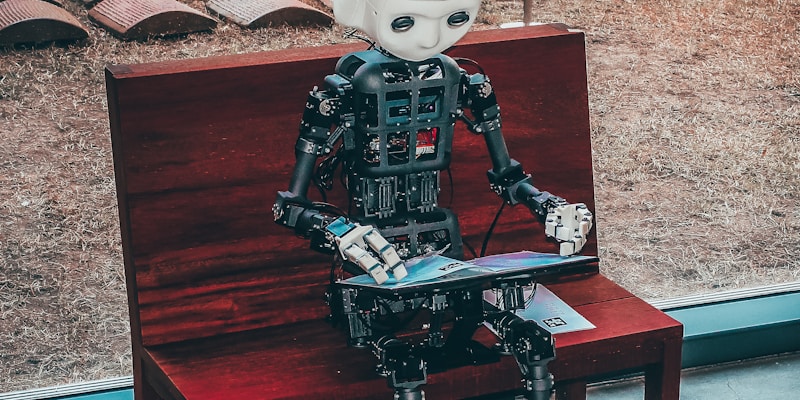
The biggest announcement for developers wasn’t a consumer product—it was NVIDIA Cosmos, a foundation model platform designed for understanding and simulating the physical world.
What is Cosmos?
Cosmos is NVIDIA’s answer to a fundamental challenge in robotics and autonomous systems: training AI that needs to interact with the real world is expensive, dangerous, and slow. Cosmos provides:
- Physics-aware world simulation for training AI in virtual environments
- Synthetic data generation that matches real-world distributions
- Transfer learning frameworks for moving from simulation to reality
# Example: Initializing a Cosmos simulation environment
from nvidia_cosmos import CosmosEnvironment, PhysicsConfig

# Create a warehouse simulation for robot training
env = CosmosEnvironment(
    world_type="indoor_warehouse",
    physics=PhysicsConfig(
        gravity=9.81,
        friction_model="realistic",
        collision_detection="continuous"
    ),
    render_quality="high"
)

# Spawn a robot agent
robot = env.spawn_agent(
    model="humanoid_v2",
    capabilities=["navigation", "manipulation", "vision"]
)

# Run training loop
for episode in range(10000):
    observation = env.reset()
    while not env.done:
        action = robot.policy(observation)
        observation, reward, done, info = env.step(action)
Why This Matters for Developers
If you’re working on:
- Robotics: Cosmos dramatically reduces the cost of training manipulation and navigation policies
- Game development: Physics simulation at this fidelity opens new possibilities for realistic game environments
- Autonomous vehicles: Train edge cases that would be dangerous to test in the real world
- Digital twins: Industrial simulation with accurate physics models
AMD Ryzen AI: NPUs Go Mainstream
AMD CEO Lisa Su unveiled the next generation of Ryzen AI processors, and the numbers matter for local AI development.
The Key Specs
| Processor | NPU Performance | CPU Cores | Target Use Case |
|---|---|---|---|
| Ryzen AI 9 HX 375 | 55 TOPS | 12 cores | Workstation AI development |
| Ryzen AI 7 350 | 50 TOPS | 8 cores | Developer laptops |
| Ryzen AI 5 340 | 45 TOPS | 6 cores | Entry-level AI-capable |
What 50+ TOPS Means in Practice
With 50 TOPS (Trillions of Operations Per Second) on the NPU, you can now run:
- Llama 3.2 3B at ~15 tokens/second locally
- Whisper Medium for real-time transcription
- Stable Diffusion XL inference in under 10 seconds
- Real-time object detection for computer vision apps
// Example: Running local inference with AMD Ryzen AI
import { RyzenAI } from '@amd/ryzen-ai-sdk';

const ai = new RyzenAI({
  preferNPU: true,
  fallbackToGPU: true
});

// Load a quantized model optimized for NPU
const model = await ai.loadModel('llama-3.2-3b-instruct-int4');

// Run inference - automatically uses NPU when available
const response = await model.generate({
  prompt: "Explain quantum computing in simple terms",
  maxTokens: 200,
  temperature: 0.7
});

console.log(response.text);
console.log(`Inference time: ${response.metrics.latencyMs}ms`);
console.log(`Tokens/sec: ${response.metrics.tokensPerSecond}`);
Developer Implications
- On-device AI becomes viable for privacy-sensitive applications
- Reduced cloud costs by offloading inference to client devices
- New application categories that require real-time AI without network latency

Intel Panther Lake: The Handheld Gaming Push
Intel’s Panther Lake processors were positioned for handheld gaming devices, but the underlying technology has broader implications.
Key Features
- Integrated Arc GPU with significant performance improvements
- Enhanced power efficiency for mobile development
- Thunderbolt 5 support for external GPU docking
- AI acceleration built into the architecture
For Game Developers
Intel’s focus on handhelds means:
// Detecting Intel Arc GPU features for optimization
#include <intel/graphics_api.hpp>

void optimizeForHandheld() {
    IntelGraphics::DeviceCapabilities caps;
    IntelGraphics::queryCapabilities(&caps);

    if (caps.isArcIntegrated) {
        // Enable Intel XeSS for AI upscaling
        renderer.enableXeSS(XeSSQuality::Performance);

        // Use variable rate shading for battery life
        renderer.enableVRS(VRSMode::Adaptive);

        // Optimize for thermal constraints
        renderer.setThermalTarget(ThermalProfile::Handheld);
    }
}
G-Sync Pulsar: Why Your Development Monitor Matters
NVIDIA announced G-Sync Pulsar, and while it’s marketed for gamers, it has real implications for developers spending 8+ hours a day staring at screens.
What Pulsar Does
- Ultra-low latency display synchronization (sub-1ms)
- Flicker-free strobing for motion clarity
- HDR support with accurate color reproduction
Developer Benefits
- Reduced eye strain during long coding sessions
- Better motion clarity when debugging animations
- Accurate color reproduction for UI/UX work
- VRR support for game development testing

The Infrastructure Story
Behind all these announcements is a massive infrastructure buildout:
xAI’s Memphis Data Center
Elon Musk’s xAI announced a $20 billion expansion of their Memphis data center, making it one of the largest AI training facilities globally. This signals:
- Increased competition in the AI model space
- Potential for new foundation models
- More affordable inference APIs as compute scales
TSMC’s 2nm Roadmap
Taiwan Semiconductor confirmed their 2nm process is on track for 2026-2027, which will enable:
- More efficient AI accelerators
- Higher density chips for mobile devices
- Reduced power consumption across the board
What Should Developers Do Now?
1. Start Experimenting with Local AI
With NPUs becoming standard, it’s time to explore local inference:
# Set up a local AI development environment
pip install llama-cpp-python onnxruntime-directml

# Test NPU availability
python -c "import onnxruntime; print(onnxruntime.get_available_providers())"
2. Explore Physical AI Platforms
If you’re in robotics, simulation, or game development:
- Sign up for NVIDIA Cosmos developer preview
- Experiment with Isaac Sim for robotics
- Look into Omniverse for collaborative simulation
3. Update Your Hardware Roadmap
When planning team equipment purchases:
| Role | Recommendation |
|---|---|
| AI/ML Engineers | AMD Ryzen AI 9 workstations |
| Game Developers | Intel Panther Lake + external GPU |
| Full-stack Developers | Any NPU-equipped laptop |
| DevOps/SRE | Cloud-first, local optional |
4. Watch the API Pricing
With xAI and others building massive infrastructure, expect:
- More competitive API pricing throughout 2026
- New model offerings from well-funded players
- Potential for specialized models at lower costs
Key Takeaways
- Physical AI is becoming accessible through platforms like Cosmos
- NPUs with 50+ TOPS make local AI inference practical
- Handheld gaming is driving innovations that benefit mobile development
- Infrastructure buildout will lead to more affordable AI APIs
- Hardware upgrades should prioritize NPU capabilities
Resources
Follow CODERCOPS for more developer-focused analysis of emerging technologies.
Sponsored
More from this category
More from AI Integration
 R.01
R.01 Document AI for Agencies: Extracting Structure from PDFs, Forms, and Contracts
 R.02
R.02 AI Video Generation in 2026: What Agencies Need to Know Before Pitching It to Clients
 R.03
R.03 Browser-Use Agents: Automating the Web When APIs Don't Exist
Sponsored
Discussion
Join the conversation.
Comments are powered by GitHub Discussions. Sign in with your GitHub account to leave a comment.
Sponsored