AI Integration · Industry News
Anthropic's AI Legal Tool Triggers $285 Billion 'SaaSpocalypse' — What Happened and What It Means
Anthropic launched an AI legal plugin for Claude Cowork and software stocks crashed. Thomson Reuters dropped 6.5%, RELX fell 9.6%, and traders called it the 'SaaSpocalypse.' Here's why one product announcement wiped out hundreds of billions in market value.

Anurag Verma
6 min read
Sponsored
On February 3, 2026, Anthropic announced a new AI-powered plugin for in-house legal teams, designed for its agentic desktop application Claude Cowork. The tool handles contract review, NDA triage, compliance processes, legal briefings, and templated responses.
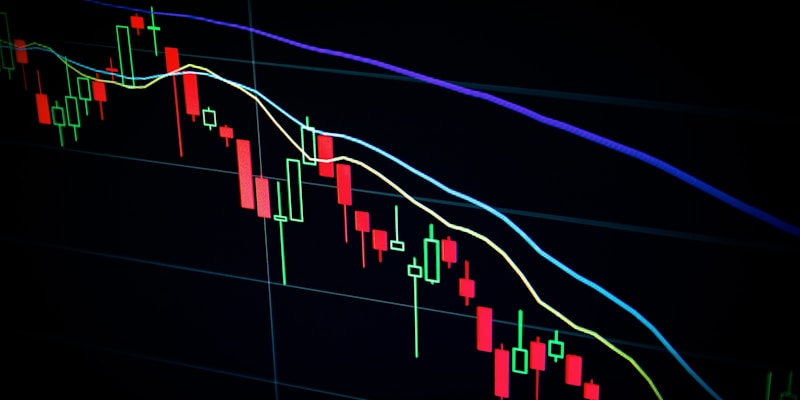
Within hours, $285 billion in market value evaporated across software, financial services, and asset management stocks. Traders called it the “SaaSpocalypse.”
The Damage
The market reaction was swift and severe:
| Stock / Index | Drop |
|---|---|
| RELX PLC (legal data) | -9.65% |
| Experian | -7.2% |
| London Stock Exchange Group | -6% |
| Thomson Reuters | -6.5% |
| Goldman Sachs US Software Basket | -6% (largest one-day decline since April tariff selloff) |
| Financial Services Index | -7% |
| Nasdaq 100 | -2.4% (intraday) |
| iShares Software ETF (IGV) | -14% over 6 sessions |
Jeffrey Favuzza, a trader at Jefferies, coined the term “SaaSpocalypse” (the apocalypse for Software-as-a-Service stocks) characterized by a “sell at any cost” trading style.
Bloomberg Intelligence analyst Anurag Rana described software sentiment as “radioactive.” Jefferies issued a note calling sentiment the “worst ever” for the sector.
What Anthropic Actually Released
The product itself is a configurable plugin for Claude Cowork, Anthropic’s desktop AI agent application. It targets in-house legal workflows:
Claude Cowork Legal Plugin
├── Contract review and redlining
├── NDA triage and classification
├── Compliance process automation
├── Legal briefing generation
├── Templated response drafting
└── Secure integration with existing tools
Anthropic emphasized the tool is intended to “assist rather than provide legal advice” and positions it as complementary to existing legal software, not a replacement.
Why the Market Reaction Was So Extreme
The selloff was not proportional to a single product launch. It reflected accumulated fear about AI’s impact on the entire SaaS business model. Several factors converged:
1. Anthropic builds its own models. Unlike startups that use third-party AI through APIs, Anthropic develops its own foundation models (Claude). This means it can deeply customize AI for specific verticals without depending on OpenAI or Google. The market views this vertical integration as a serious competitive threat.
2. Legal software is a high-margin monopoly. Companies like Thomson Reuters (Westlaw) and RELX (LexisNexis) have dominated legal data and software for decades with operating margins above 30%. These are exactly the kind of entrenched, high-margin businesses that AI disruption threatens most.
3. The pattern is accelerating. This was not an isolated incident. The iShares Software ETF (IGV) had already fallen 15% in January, its worst month since 2008. The Anthropic announcement was the trigger, but the fear was already building.
4. AI agents are qualitatively different. Previous AI tools augmented existing workflows. Agentic AI tools like Claude Cowork can execute entire workflows autonomously. The difference between “AI helps a lawyer review contracts faster” and “AI reviews contracts without a lawyer” is the difference between a productivity tool and a replacement.
The SaaS Business Model Under Pressure
The deeper issue is what this means for SaaS companies broadly. The SaaS model depends on three things:
- Recurring revenue from subscriptions
- High switching costs (data lock-in, workflow integration)
- Incremental feature development that justifies price increases
AI threatens all three. If an AI agent can perform the same workflow as a SaaS tool (pulling data from multiple sources, processing it, and delivering results) the value shifts from the software to the AI layer. The SaaS tool becomes a data source that the AI accesses, not the product the user interacts with.
Traditional SaaS Model
User → SaaS Application → Data → Output

AI Agent Model
User → AI Agent → [SaaS as data source] → Output
In the AI agent model, the SaaS application loses its position as the primary user interface. It becomes infrastructure, and infrastructure is commoditized.
Who Is Actually Threatened
Not all software companies face the same risk. The exposure depends on how much of their value comes from data versus workflow:
| Company Type | Risk Level | Why |
|---|---|---|
| Legal data providers (RELX, Thomson Reuters) | High | AI can access the same public legal data and case law |
| Document management (Adobe, DocuSign) | High | AI agents can read, write, and route documents |
| CRM (Salesforce) | Medium-High | AI can manage customer relationships conversationally |
| Cloud infrastructure (AWS, Azure) | Low | AI increases compute demand, not decreases it |
| Developer tools (GitHub, Atlassian) | Medium | AI coding tools supplement but developers still needed |
| Cybersecurity (CrowdStrike, Palo Alto) | Low | AI creates new threats that require security solutions |
Anthropic’s Strategic Position
Anthropic occupies a unique position in the AI landscape. It is the only major AI lab that:
- Builds frontier foundation models (Claude)
- Operates a consumer-facing product (claude.ai, Claude Cowork)
- Is pursuing vertical industry applications (legal, with more expected)
- Is not owned by or dependent on a cloud hyperscaler
This makes it simultaneously a platform company and a vertical application company, a combination that historically produces the most disruptive outcomes.
What This Means for Builders
For developers and businesses building software products, the SaaSpocalypse is a signal to reconsider defensibility:
1. Data moats matter more than UI. If your product’s value comes from a nice interface on commodity data, AI agents will replicate that value. If it comes from proprietary data, you are harder to displace.
2. Build for AI integration, not against it. The companies that survive the AI disruption of SaaS will be the ones that make their data and functionality accessible to AI agents, becoming part of the AI workflow rather than competing with it.
3. Domain expertise is a moat. Anthropic’s legal tool works for general legal workflows. Highly specialized domain knowledge (industry-specific compliance, jurisdiction-specific regulations, complex multi-party transactions) remains hard for general-purpose AI to replicate.
4. Speed of adaptation wins. The software companies that move fastest to integrate AI into their products, rather than treating it as a threat, will retain their customer relationships. The ones that try to protect their existing business model will be disrupted.
The SaaSpocalypse is not about one product launch. It is the market pricing in a future where AI agents can perform white-collar workflows that previously required specialized software. That future arrived faster than most investors expected.
Sponsored
More from this category
More from AI Integration
 R.01
R.01 Document AI for Agencies: Extracting Structure from PDFs, Forms, and Contracts
 R.02
R.02 AI Video Generation in 2026: What Agencies Need to Know Before Pitching It to Clients
 R.03
R.03 Browser-Use Agents: Automating the Web When APIs Don't Exist
Sponsored
Discussion
Join the conversation.
Comments are powered by GitHub Discussions. Sign in with your GitHub account to leave a comment.
Sponsored