Cybersecurity · Security
AI-Powered Cybersecurity in 2026: Anomaly Detection Changes Everything
How AI is transforming threat detection, anomaly detection, and automated incident response in 2026. Real-world examples, platform comparisons, and what developers and businesses need to know.

Anurag Verma
18 min read

Sponsored
Here is a number that should concern every developer and business leader reading this: 87% of global organizations reported experiencing AI-driven security incidents in the past year. Not theoretical threats. Not proof-of-concept attacks. Real incidents, at real companies, causing real damage.
We are now firmly in the era where artificial intelligence sits on both sides of the cybersecurity equation. Attackers are using AI to craft hyper-personalized phishing campaigns, automate vulnerability discovery, and generate adaptive malware that mutates faster than signature-based tools can track. Defenders are using AI to detect anomalies in real time, automate incident response, and identify zero-day threats before they cause breaches.
At CODERCOPS, we have spent the first quarter of 2026 helping clients navigate this rapidly shifting landscape. This post distills what we have learned — the tools that actually work, the threats that keep us up at night, and the practical steps every development team should be taking right now.
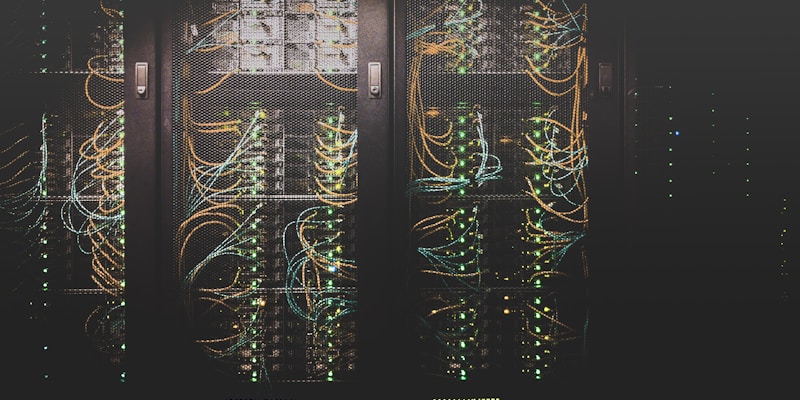 AI-driven security operations centers now process trillions of events per day, detecting threats that would be invisible to human analysts
The 2026 Threat Landscape by the Numbers
Before we talk about defenses, we need to understand what we are defending against. The data from early 2026 paints a stark picture.
Key Statistics
| Metric | Value | Source |
|---|---|---|
| AI-powered breach average cost | $5.72 million | IBM X-Force 2026 |
| YoY increase in AI-enabled adversary attacks | 89% | CrowdStrike Global Threat Report 2026 |
| Organizations hit by AI-driven incidents | 87% | State of AI Cybersecurity 2026 |
| Average eCrime breakout time | 29 minutes | CrowdStrike 2026 |
| Increase in active ransomware groups | 49% YoY | IBM X-Force 2026 |
| Malware-free detections | 82% of all detections | CrowdStrike 2026 |
| Global info security spending (projected) | $244.2 billion | Gartner 2026 |
That 29-minute breakout time is worth pausing on. It means that once an attacker gains initial access to your environment, they can move laterally to other systems in under half an hour. Two years ago, that number was measured in hours. AI-powered attack tooling has compressed the window for human response to near zero.
And 82% of detections being malware-free tells us something critical: traditional antivirus and signature-based detection is effectively obsolete as a primary defense. Attackers are living off the land, using legitimate tools and credentials, and AI is the only way to catch them.
What Attackers Are Using AI For
According to the State of AI Cybersecurity 2026 report, the top AI-powered attack vectors are:
- Hyper-personalized phishing (50% of organizations cite as top concern) — AI generates emails that perfectly mimic writing style, reference real internal projects, and bypass spam filters
- Automated vulnerability scanning and exploit chaining (45%) — AI discovers and chains vulnerabilities faster than human pen-testers
- Adaptive malware (40%) — Malware that changes its behavior based on the environment it detects
- Deepfake voice fraud (40%) — Convincing voice clones used for social engineering and authorization bypass
How AI Anomaly Detection Actually Works
The phrase “AI-powered security” gets thrown around a lot in marketing copy. Let us cut through the noise and explain what is actually happening under the hood.
The Detection Pipeline
At its core, AI anomaly detection follows a pipeline that moves from raw data to actionable alerts:
AI Anomaly Detection Pipeline
==============================

  [Data Sources]
       |
       v
+------+-------+-------+-------+--------+
| Network  | Endpoint | Cloud  | User   | App    |
| Traffic  | Logs     | Events | Auth   | Logs   |
+------+-------+-------+-------+--------+
       |
       v
  [Data Ingestion & Normalization]
  - Parse heterogeneous log formats
  - Timestamp alignment
  - Entity resolution (user/device/IP)
       |
       v
  [Baseline Learning Phase]
  - Unsupervised ML builds "normal" profile
  - Per-user, per-device, per-application
  - Continuous retraining (sliding window)
       |
       v
  [Real-Time Analysis Engine]
  - Behavioral deviation scoring
  - Contextual risk assessment
  - Cross-signal correlation
       |
       v
  [Anomaly Classification]
  - Benign deviation (e.g., new project)
  - Suspicious (investigate)
  - Critical (auto-respond)
       |
       v
  [Response Orchestration]
  - Alert SOC team
  - Auto-isolate endpoint
  - Block lateral movement
  - Trigger forensic capture
The Three Layers of AI Detection
Layer 1: Behavioral Baselining. The AI system ingests weeks or months of data to understand what “normal” looks like for every user, device, and application in your environment. A marketing employee who accesses Figma and Google Docs every day has a different baseline than a database administrator who runs SQL queries at 2 AM. The system learns both patterns and flags deviations from each individual baseline — not from some generic ruleset.
Layer 2: Cross-Signal Correlation. This is where AI dramatically outperforms traditional SIEM rules. Instead of looking at events in isolation, the AI correlates signals across the entire environment. A single failed login attempt is noise. A failed login attempt from a new IP, followed by a successful login, followed by access to a file share the user has never touched, followed by an unusually large data transfer — that is a kill chain, and AI can detect the pattern across all those signals in milliseconds.
Layer 3: Predictive Threat Modeling. The most advanced systems do not just detect ongoing attacks. They predict likely attack paths based on your environment’s topology, known vulnerabilities, and current threat intelligence. This allows teams to harden the most probable entry points before attacks happen.
AI Security Platforms: A Head-to-Head Comparison
We have evaluated the major AI security platforms extensively — both for our own infrastructure and for client deployments. Here is how the leading platforms compare in 2026.
 Choosing the right AI security platform depends on your primary attack surface — endpoint, network, or cloud
Platform Comparison
| Feature | CrowdStrike Falcon | Darktrace | SentinelOne Singularity | Palo Alto Cortex XDR | Microsoft Defender XDR |
|---|---|---|---|---|---|
| Primary Strength | Endpoint + Threat Intel | Network Anomaly Detection | Autonomous Endpoint | Cross-Domain XDR | Microsoft Ecosystem |
| AI Engine | Charlotte AI + Threat Graph | Self-Learning AI | Purple AI + Static/Behavioral | Cortex AI + AutoFocus | Copilot for Security |
| Detection Approach | Cloud-native, IOA-based | Unsupervised ML baselining | On-agent ML + cloud AI | Multi-source correlation | Graph-based correlation |
| Autonomous Response | Partial (workflow-based) | Antigena (full auto) | Full (rollback capable) | SOAR-integrated | Automated disruption |
| Zero-Day Detection | Strong (98%+ accuracy) | Strong (behavioral) | Strong (behavioral + static) | Strong (WildFire sandbox) | Good (cloud analytics) |
| Mean Time to Detect | ~1 minute | Real-time | ~1 minute | Minutes | Minutes |
| Agentic AI Features | Charlotte AI triage (98% accuracy) | Cyber AI Analyst | Purple AI natural language | Cortex XSIAM copilot | Security Copilot |
| Best For | Large enterprises, threat hunting | Network-heavy environments | Autonomous response needs | Multi-vendor environments | Microsoft-centric orgs |
| Pricing Model | Per-endpoint, tiered | Per-device, custom | Per-endpoint, tiered | Per-endpoint/log volume | Per-user, E5 bundle |
CrowdStrike Falcon
CrowdStrike’s Threat Graph processes over 2 trillion security events per week. Their Charlotte AI assistant has demonstrated 98%+ accuracy in detection triage, which is significant because alert fatigue — security teams drowning in false positives — is one of the biggest operational challenges in cybersecurity today. Charlotte AI effectively acts as a first-pass analyst, filtering noise from real threats.
What sets CrowdStrike apart in 2026 is their intelligence-led approach. The Threat Graph does not just look at your environment in isolation — it correlates patterns across their entire customer base to identify emerging campaigns in real time.
Darktrace
Darktrace takes a fundamentally different approach. Rather than relying on threat intelligence or known attack signatures, Darktrace’s Self-Learning AI builds an evolving model of “normal” for every device, user, and connection in your network. When something deviates from that model, it flags it.
This makes Darktrace particularly strong at detecting insider threats, novel attack techniques, and slow-burn compromises that signature-based tools miss entirely. Their Antigena module can autonomously respond to threats in real time — slowing or blocking suspicious connections without human intervention.
The trade-off is that unsupervised learning systems can produce more false positives during the initial learning period and after legitimate changes to the environment. But once tuned, Darktrace’s detection of truly novel anomalies is unmatched.
SentinelOne Singularity
SentinelOne’s differentiator is its on-agent AI. The machine learning models run directly on the endpoint, meaning detection and response happen even when the device is offline or disconnected from the cloud. This is critical for environments with unreliable connectivity or strict data residency requirements.
Their rollback capability is genuinely impressive in practice. When ransomware is detected, SentinelOne can automatically roll back the endpoint to its pre-infection state — reversing file encryption, registry changes, and persistence mechanisms. In a real-world incident we observed, a healthcare provider’s SentinelOne deployment detected a zero-day ransomware variant exploiting a medical imaging application, isolated the machine, and rolled back all changes before patient records were impacted.
Purple AI adds a natural language interface to their platform, letting analysts ask questions like “Show me all processes that made outbound connections to new domains in the last 24 hours” instead of writing complex queries.
Real-World Examples: AI Stopping Cyberattacks
Theory is one thing. Here is what AI-powered defense looks like in practice.
Case 1: Banking Network Zero-Day
In early 2025, a major banking network was targeted through a zero-day vulnerability in a payment gateway. The attack was sophisticated — the malware used encrypted communication channels and legitimate system tools, making it invisible to traditional detection. An AI system from SentinelOne detected unusual API call patterns occurring at 2 AM, outside the payment gateway’s normal operational profile. The system blocked the process and alerted administrators within seconds, preventing any data exfiltration.
Case 2: MOVEit Supply Chain Attack
During the 2024 MOVEit supply chain attack, organizations using AI-driven anomaly detection had a critical advantage. Their systems flagged irregular data transfer patterns — unusual volumes going to unfamiliar external endpoints — before signature-based tools had even been updated with the new IOCs (Indicators of Compromise). This gave those organizations hours or even days of lead time to isolate affected systems.
Case 3: Trend Micro’s AESIR Framework
In January 2026, Trend Micro unveiled AESIR, an AI framework that has already tracked and triaged over 140 proof-of-concept exploits in the wild. Their FENRIR module analyzes source code to identify patterns consistent with known vulnerability classes — deserialization flaws, authentication weaknesses, injection points — and surfaces candidates for review before they are exploited. This represents a shift from reactive to predictive security.
The Numbers on AI Defense Effectiveness
Organizations that have deployed extensive AI and automation in their security stack see measurable results:
- Average breach cost with AI: $3.62 million
- Average breach cost without AI: $5.52 million
- Cost savings per incident: $1.9 million
- Threat detection speed: Under 60 seconds vs. weeks for manual analysis
- AI-based detection success rate: 98.7%
That $1.9 million per-incident savings is not a theoretical projection. It comes from IBM’s analysis of real breaches across hundreds of organizations.
The Flip Side: AI-Powered Attacks
 The same AI capabilities that power defense are being weaponized by adversaries
We cannot discuss AI in cybersecurity without addressing the uncomfortable truth: the same technology that powers defense is being weaponized by attackers. And in some areas, attackers are moving faster.
How Adversaries Are Using AI
Autonomous Vulnerability Discovery. AI agents that continuously scan the internet for vulnerable applications, automatically generate exploits, and attempt compromise — all without human involvement. CrowdStrike’s 2026 Global Threat Report documented an 89% increase in attacks by AI-enabled adversaries year over year.
Polymorphic Malware at Scale. AI-generated malware that rewrites its own code with every deployment, making signature-based detection mathematically impossible. Each variant is unique, but the behavior remains malicious. Only behavioral AI can catch these.
Deepfake-Enhanced Social Engineering. Real-time voice cloning and video deepfakes used in targeted attacks against executives and finance teams. Imagine receiving a video call from your CEO requesting an urgent wire transfer — where the video and voice are AI-generated but indistinguishable from real.
AI-Powered Phishing Factories. Systems that ingest publicly available data about targets (LinkedIn profiles, company blogs, conference talks), then generate highly personalized phishing emails that reference real projects, use the correct internal jargon, and arrive at contextually appropriate times.
The Agentic AI Threat
Gartner predicts that 40% of enterprise applications will include task-specific AI agents by 2026, up from less than 5% in 2025. Each of those agents represents a potential attack surface. As we covered in our earlier post on AI agent security, tool poisoning, memory injection, and agency hijacking are emerging attack vectors that most security frameworks do not yet address.
The convergence of agentic AI and cybersecurity creates a paradox: the more autonomous our defenses become, the more autonomous attack vectors we create.
What Developers Need to Do Right Now
If you are building applications in 2026, security cannot be a phase that happens after development. It must be embedded into every stage of the software lifecycle. Here is what we recommend based on our work with clients across industries.
1. Implement Behavioral Monitoring from Day One
Do not wait until you have suffered a breach to deploy behavioral analytics. Modern applications should emit structured security telemetry from the start:
# Example: Structured security event logging
import json
import time
from datetime import datetime, timezone

def log_security_event(event_type, user_id, details, risk_score=0):
    """Emit structured security events for AI anomaly detection."""
    event = {
        "timestamp": datetime.now(timezone.utc).isoformat(),
        "event_type": event_type,
        "user_id": user_id,
        "source_ip": get_client_ip(),
        "user_agent": get_user_agent(),
        "geo_location": get_geo_from_ip(),
        "risk_score": risk_score,
        "details": details,
        "session_id": get_session_id(),
        "request_id": get_request_id()
    }
    # Ship to your SIEM / AI detection platform
    security_logger.info(json.dumps(event))

# Usage in authentication flow
log_security_event(
    event_type="auth.login.success",
    user_id=user.id,
    details={
        "method": "oauth2",
        "provider": "google",
        "mfa_used": True,
        "device_fingerprint": device_fp
    },
    risk_score=calculate_login_risk(user, request)
)
2. Adopt Zero Trust Architecture
The perimeter is dead. In 2026, every request must be authenticated, authorized, and continuously validated regardless of where it originates:
Zero Trust Implementation Checklist:

[x] Identity verification on every request
[x] Least-privilege access by default
[x] Micro-segmentation of network resources
[x] Continuous session validation
[x] Device trust assessment
[x] Encrypted communications everywhere
[x] AI-powered behavioral monitoring
[ ] Regular access reviews (quarterly minimum)
[ ] Automated credential rotation
[ ] Supply chain verification (SBOM)
3. Secure Your AI Integrations
If your application uses AI services — LLM APIs, AI agents, vector databases — each integration point is a potential attack surface:
- Validate all AI outputs before acting on them
- Implement rate limiting on AI API calls to prevent abuse
- Sanitize inputs going to and coming from AI services
- Monitor AI service behavior for anomalies (unexpected response patterns, latency spikes)
- Maintain an AI Bill of Materials documenting every AI model, API, and data pipeline in your stack
4. Build an Incident Response Plan That Accounts for AI Speed
Traditional incident response plans assume human-speed attacks. AI-powered attacks operate at machine speed. Your response plan needs to match:
AI-Era Incident Response Timeline:

  0-60 seconds:    Automated detection + initial containment
  1-5 minutes:     AI triage + severity classification
  5-15 minutes:    Human analyst review + escalation decision
  15-30 minutes:   Full containment + forensic preservation
  30-60 minutes:   Root cause analysis begins
  1-4 hours:       Remediation + recovery
  24 hours:        Post-incident review initiated
If your response plan starts with “Page the on-call engineer,” you are already 29 minutes behind a modern eCrime actor.
What Businesses Need to Know
The ROI of AI Security Is No Longer Theoretical
With AI-driven breach costs averaging $5.72 million and AI-equipped organizations saving $1.9 million per incident, the business case writes itself. The question is not whether to invest in AI-powered security — it is how quickly you can deploy it.
Global information security spending will reach $244.2 billion in 2026 according to Gartner, with AI cybersecurity growing at a 74% CAGR. The market is moving decisively in one direction.
The Talent Gap Is the Real Bottleneck
77% of organizations now use generative AI or LLMs in their security stack, and 67% have deployed agentic AI for autonomous or semi-autonomous security operations. But nearly half of security professionals say their organizations lack the skills to use these tools effectively.
This is why managed security services and security consultancies that specialize in AI-powered defense are seeing explosive growth. If you cannot hire a team of AI-security specialists (and almost nobody can — the talent pool is tiny), partnering with firms that have this expertise is the pragmatic path.
Compliance Is Catching Up
Regulators are beginning to mandate AI-aware security practices. The EU AI Act’s security provisions are now enforceable, and the US is moving toward similar frameworks. If your organization uses AI in any capacity, you need a documented AI security assessment process. The share of organizations conducting these assessments has risen from 37% to 64% year-over-year, and that trajectory will only accelerate.
What Comes Next: Predictions for Late 2026
Based on the trends we are tracking, here is where we expect AI-powered cybersecurity to evolve over the remainder of 2026:
Agentic SOC Operations. Security Operations Centers will increasingly run on autonomous AI agents that handle first-pass triage, investigation, and even containment without human involvement. The human role shifts from reactive monitoring to strategic oversight and edge-case handling.
AI-vs-AI Arms Race Escalation. Expect adversarial AI attacks that specifically target defensive AI systems — attempting to poison training data, evade behavioral models, or exploit blind spots in ML detection. The arms race will intensify.
Consolidation in the Vendor Landscape. The AI security market is growing at 74% CAGR. That growth rate attracts fragmentation. Expect major acquisitions as the large platform vendors (CrowdStrike, Palo Alto, Microsoft) absorb specialized AI security startups.
Quantum-Resistant Cryptography Adoption. With quantum computing capabilities advancing, forward-thinking organizations are already migrating to post-quantum cryptographic standards. AI is accelerating this migration by automating the discovery and remediation of vulnerable cryptographic implementations.
Where CODERCOPS Fits In
We are not a cybersecurity company. We are a development agency that takes security seriously because building insecure software is not an option in 2026.
For our clients, that means:
- Security-first architecture baked into every project from the design phase
- Structured security telemetry integrated into every application we build
- AI security assessment as part of our code review and deployment processes
- Ongoing advisory on the threat landscape and practical countermeasures
If your organization is navigating the intersection of AI and cybersecurity — whether you are building AI-powered products that need to be secured, or deploying AI tools to protect existing infrastructure — we would welcome the conversation.
Ready to strengthen your security posture? Get in touch with us to discuss how we can help your team build secure, AI-aware applications that are resilient against the threats of 2026 and beyond.
Sponsored
More from this category
More from Cybersecurity
 R.01
R.01 Secrets Management in 2026: Vault, Doppler, AWS Secrets Manager, and When .env Is Fine
 R.02
R.02 Container Security in 2026: Image Scanning, SBOMs, and What Teams Actually Do
 R.03
R.03 Passkeys Are Ready: Implementing Passwordless Auth in Your Web App
Sponsored
Discussion
Join the conversation.
Comments are powered by GitHub Discussions. Sign in with your GitHub account to leave a comment.
Sponsored