AI Integration · Compliance
AI Governance in 2026: Navigating the Patchwork of Laws, Risks, and Responsibilities
The AI regulatory landscape is fragmented, evolving, and confusing. Here's a practical guide to what you need to know about AI governance in 2026, whether you're building AI products or deploying them.

Anurag Verma
9 min read

Sponsored
If there’s one thing that keeps AI leaders up at night in 2026, it’s not the technology. It’s the regulation.
The regulatory landscape for AI is, to put it diplomatically, a mess. Different countries, different states, different industries, all with different rules, different definitions, and different enforcement mechanisms. And it’s changing every few months.
I’m not a lawyer, and this isn’t legal advice. But I’ve spent enough time working with companies deploying AI to understand the landscape and the practical implications. Here’s my attempt to make sense of it.
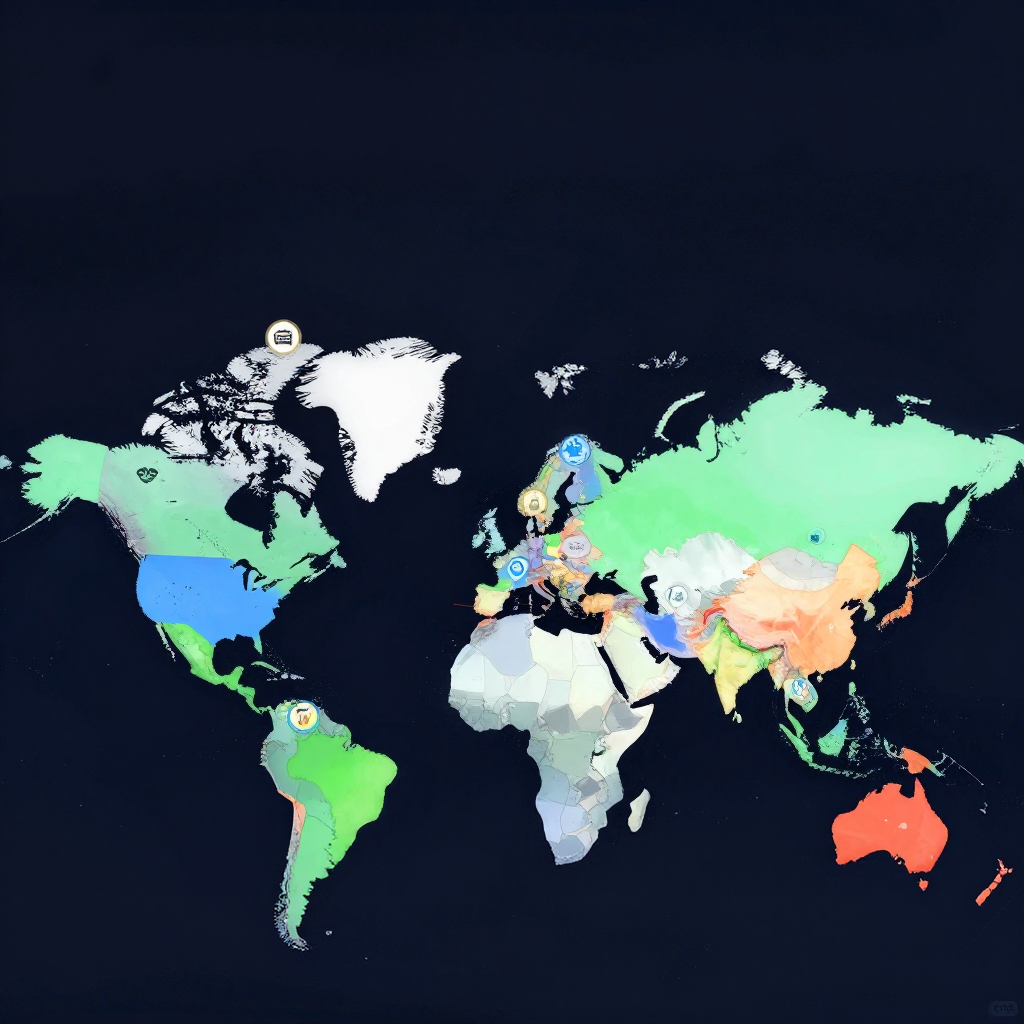 The regulatory landscape for AI is fragmented and evolving rapidly
The Global Patchwork
European Union: The EU AI Act
The EU, as usual, moved first on comprehensive regulation. The EU AI Act is the most significant piece of AI legislation in the world, and it’s now being enforced.
The core framework is risk-based:
| Risk Level | Examples | Requirements |
|---|---|---|
| Unacceptable | Social scoring, real-time biometric surveillance | Banned outright |
| High | Hiring tools, credit scoring, medical devices | Conformity assessment, documentation, human oversight |
| Limited | Chatbots, deepfake generators | Transparency obligations (must disclose AI use) |
| Minimal | Spam filters, game AI | No specific requirements |
If you’re selling AI products or services to EU customers, you need to understand which risk category you fall into. Many tools that seem benign (like an AI-powered resume screener) land squarely in the “high risk” category.
United States: The Federal Approach
The U.S. approach in 2026 is… evolving. The current administration has taken a different stance on AI regulation than the previous one, generally favoring industry self-regulation over prescriptive rules.
But that doesn’t mean there’s no regulation. Existing laws still apply:
- Employment law applies to AI-powered hiring tools
- HIPAA applies to AI processing health data
- Fair lending laws apply to AI credit decisions
- FTC enforcement covers deceptive AI practices
- Copyright law is still being sorted out for AI-generated content
And states are moving independently. Colorado, California, Illinois, and New York City all have AI-specific regulations, particularly around employment and housing decisions.
China
China’s AI regulations are comprehensive and enforcement-focused. Specific rules cover generative AI, recommendation algorithms, and deep synthesis (deepfakes). If you operate in China or serve Chinese customers, these are not optional.
Rest of World
Canada, Brazil, Japan, South Korea, India, and others are all developing AI frameworks. Most are still in draft or early implementation stages. The trend is toward risk-based approaches similar to the EU model, but with local variations.
What This Means If You’re Building AI Products
The Compliance Checklist
Here’s the practical minimum I’d recommend for any company building or deploying AI:
Documentation
- Document what AI models you use and for what purpose
- Record your training data sources and any known biases
- Maintain records of testing and validation results
- Keep an audit trail of AI-assisted decisions
Transparency
- Tell users when they’re interacting with AI
- Disclose when AI was used to make decisions that affect them
- Provide clear explanations of how AI outputs influenced outcomes
- Make it easy for users to request human review
Human Oversight
- Identify decisions that require human review before acting on AI output
- Design workflows with human checkpoints for high-stakes decisions
- Train the humans in the loop to effectively evaluate AI outputs
- Document who is responsible for overseeing AI systems
Testing and Monitoring
- Test for bias across protected categories before deployment
- Monitor AI outputs in production for drift and degradation
- Run regular audits comparing AI decisions to human decisions
- Have a process for handling errors and complaints
The Employment AI Minefield
If you’re using AI for anything related to hiring, performance evaluation, or workforce management, pay very close attention. This is the most active area of AI regulation, and the one where companies are getting into trouble.
Laws in multiple jurisdictions now require:
- Bias audits of AI hiring tools (NYC Local Law 144 was early; others followed)
- Candidate notification when AI is used in the hiring process
- Opt-out mechanisms allowing candidates to request human-only evaluation
- Documentation of how AI tools were validated for fairness
The penalties for non-compliance are real and growing. And beyond legal penalties, the reputational damage of a biased AI hiring tool making headlines is significant.
The Human-in-the-Loop Imperative
“Human-in-the-loop” has become the mantra of responsible AI deployment, and for good reason. But there’s a gap between the principle and the practice.
What Good Human Oversight Looks Like
It’s not just putting a “confirm” button before an AI-generated decision goes through. Effective human oversight means:
The human understands what the AI did. If someone is rubber-stamping AI outputs without comprehension, that’s not oversight. It’s theater. People need training on what the AI is doing, what its limitations are, and what to look for.
The human has the authority to override. If the organizational culture punishes people for disagreeing with the AI, the human-in-the-loop is decorative. People need explicit permission and support to say “the AI got this wrong.”
The human has enough time. If someone is expected to review 500 AI decisions per hour, they’re not reviewing anything. Workload needs to be realistic for meaningful oversight.
There’s feedback back to the system. When a human overrides an AI decision, that information should feed back into improving the system. Otherwise you’re not learning from your oversight process.
Where Human Oversight Is Most Critical
- Healthcare: AI assists diagnosis, human makes the final call
- Criminal justice: AI may flag patterns, human makes sentencing or parole decisions
- Finance: AI recommends credit decisions, human reviews edge cases
- Hiring: AI ranks candidates, human makes selection decisions
- Content moderation: AI flags content, human reviews borderline cases
Practical Governance Framework
If you’re responsible for AI governance at your organization, here’s a framework that I’ve seen work:
Step 1: Inventory Your AI
You can’t govern what you don’t know about. Catalog every AI system in use:
- What does it do?
- What data does it process?
- Who uses it?
- What decisions does it influence?
- Where was it sourced (vendor, open-source, built in-house)?
Many organizations are surprised by this exercise. Shadow AI (teams using AI tools without IT’s knowledge) is common.
Step 2: Classify Risk
For each AI system, assess:
- Impact: What happens if it’s wrong? Minor inconvenience or life-altering decision?
- Autonomy: Does it make decisions independently or assist human decision-makers?
- Scope: How many people does it affect?
- Data sensitivity: What kind of data does it process?
High impact + high autonomy + wide scope + sensitive data = high risk. Prioritize governance efforts accordingly.
Step 3: Set Policies
Based on your risk classification, establish clear policies:
- What AI uses are approved, and by whom?
- What data can be processed by AI tools?
- What decisions require human review?
- How are AI systems tested before deployment?
- How are AI errors handled and reported?
Step 4: Build Accountability
Assign clear ownership:
- Who is responsible for each AI system?
- Who reviews AI performance regularly?
- Who handles incidents and complaints?
- Who stays current on regulatory changes?
Step 5: Monitor and Adapt
AI governance isn’t a one-time project. Build regular review cycles:
- Quarterly audits of high-risk AI systems
- Annual policy reviews
- Ongoing regulatory monitoring
- Regular training updates for teams
The Vendor Question
Many companies don’t build AI. They buy it. That doesn’t eliminate governance responsibility. If your vendor’s AI tool makes a biased hiring decision, you’re still liable.
Questions to ask your AI vendors:
- How was the model trained? On what data?
- What bias testing has been done?
- How do they handle data privacy?
- What’s their incident response process?
- Will they support you in a regulatory audit?
- Do they provide documentation sufficient for compliance?
If a vendor can’t or won’t answer these questions, that’s a red flag.
What I Think Happens Next
The regulatory landscape is going to keep evolving. Here’s what I expect:
Convergence, slowly. Different jurisdictions are taking different approaches, but the general direction is similar: risk-based, transparency-focused, with special attention to high-stakes decisions. Over time, I expect more alignment, but “over time” means years, not months.
Enforcement picks up. So far, enforcement has been limited. That’s going to change. The EU AI Act has teeth, and regulators in the U.S. and elsewhere are building capacity. The first major enforcement actions will send shockwaves through the industry.
Standards emerge. ISO, NIST, and other standards bodies are developing AI-specific frameworks. These will become the practical benchmarks for compliance, similar to how ISO 27001 works for information security.
The compliance industry grows. Just as GDPR spawned an entire industry of consultants, tools, and certifications, AI regulation will do the same. AI audit firms, compliance platforms, and governance-as-a-service will become common.
The companies that get ahead of regulation, building governance frameworks now before enforcement catches up, will have a significant advantage. Retrofitting compliance is always harder and more expensive than building it in from the start.
Resources
- AI Trends for 2026: Federal Government’s Use and Regulation of AI, MoFo
- AI Trends for 2026: Navigating the Patchwork of Laws, MoFo
- 2026 Global AI Trends: Six Key Developments, Dentons
- EU AI Act Official Text
Need help building an AI governance framework or assessing your compliance posture? CODERCOPS works with legal and technical teams to build practical governance that doesn’t slow down innovation.
Sponsored
More from this category
More from AI Integration
 R.01
R.01 Document AI for Agencies: Extracting Structure from PDFs, Forms, and Contracts
 R.02
R.02 AI Video Generation in 2026: What Agencies Need to Know Before Pitching It to Clients
 R.03
R.03 Browser-Use Agents: Automating the Web When APIs Don't Exist
Sponsored
Discussion
Join the conversation.
Comments are powered by GitHub Discussions. Sign in with your GitHub account to leave a comment.
Sponsored